
Radiology is being reshaped by tools that amplify clinical judgment, not compete with it. Few people embody that evolution more than Dr. Greg Albers, co-founder of RapidAI and professor of neurology at Stanford University. Long before AI became part of everyday clinical practice, his research team was using early automated imaging software in landmark trials to quantify tissue viability and identify which patients still had something to save. As he explains, “Imaging could show us who was likely to benefit from treatment, and software gave us a way to measure that accurately and quickly.”
That work didn’t just expand the stroke treatment window — it proved that software-driven imaging analysis could change patient care. Those early algorithms became the seed of what would eventually grow into RapidAI, showing how intelligence built around imaging could support faster, more confident decisions in the moments that matter most.
From imaging discovery to algorithm-driven care
Before the now-familiar 24-hour stroke window, treatment decisions relied almost entirely on time. But as Greg recounts in the Radiology Rewired podcast, perfusion and diffusion MRI revealed a far more nuanced picture:
- Many patients still had large areas of salvageable tissue hours after onset.
- Others had progressed quickly, with limited tissue to protect even early on.
- And most importantly — imaging, not the clock, was the real determinant of benefit.
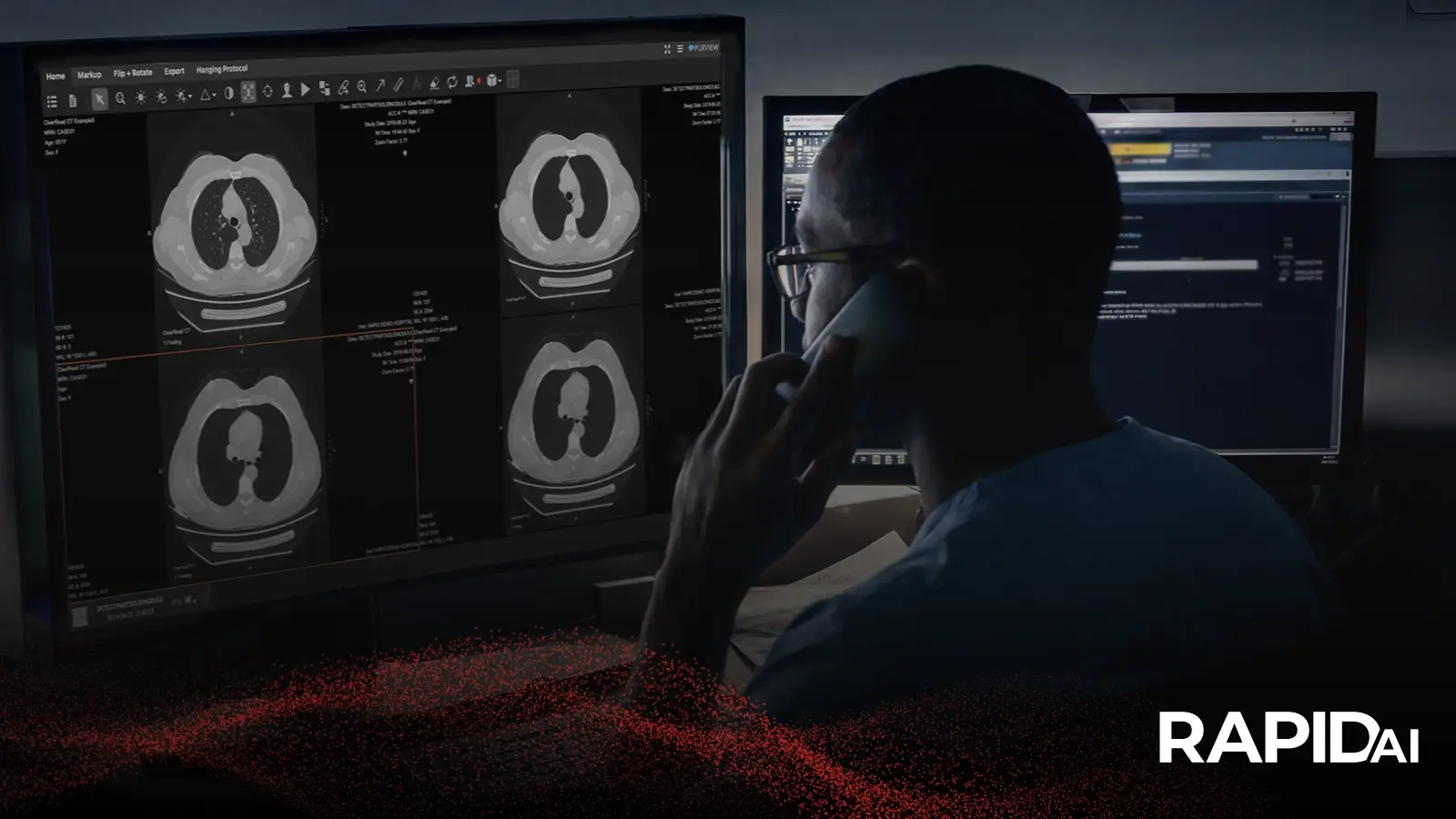
This tissue-based model required calculations that were difficult to interpret quickly and consistently across hospitals. Early automated perfusion software helped standardize those measurements in the DEFUSE trials, demonstrating that imaging-driven selection could dramatically improve outcomes.
That insight would later become the foundation for RapidAI’s deep clinical AI platform.
Why stroke imaging needed automation long before “AI” was a buzzword
Greg describes the challenge clearly: the science was strong, but the workflow was not. Perfusion imaging had the power to reveal which patients still had salvageable tissue, but that insight only mattered if the maps were processed correctly, if thresholds were applied consistently, and if results reached clinicians quickly enough to guide a real-time decision.
Automation emerged because the clinical science required it. The early tools developed for the DEFUSE trials were created to make complex imaging usable in urgent settings. They helped identify core and penumbra automatically, standardized perfusion maps, and delivered information fast enough for stroke teams to act with confidence.
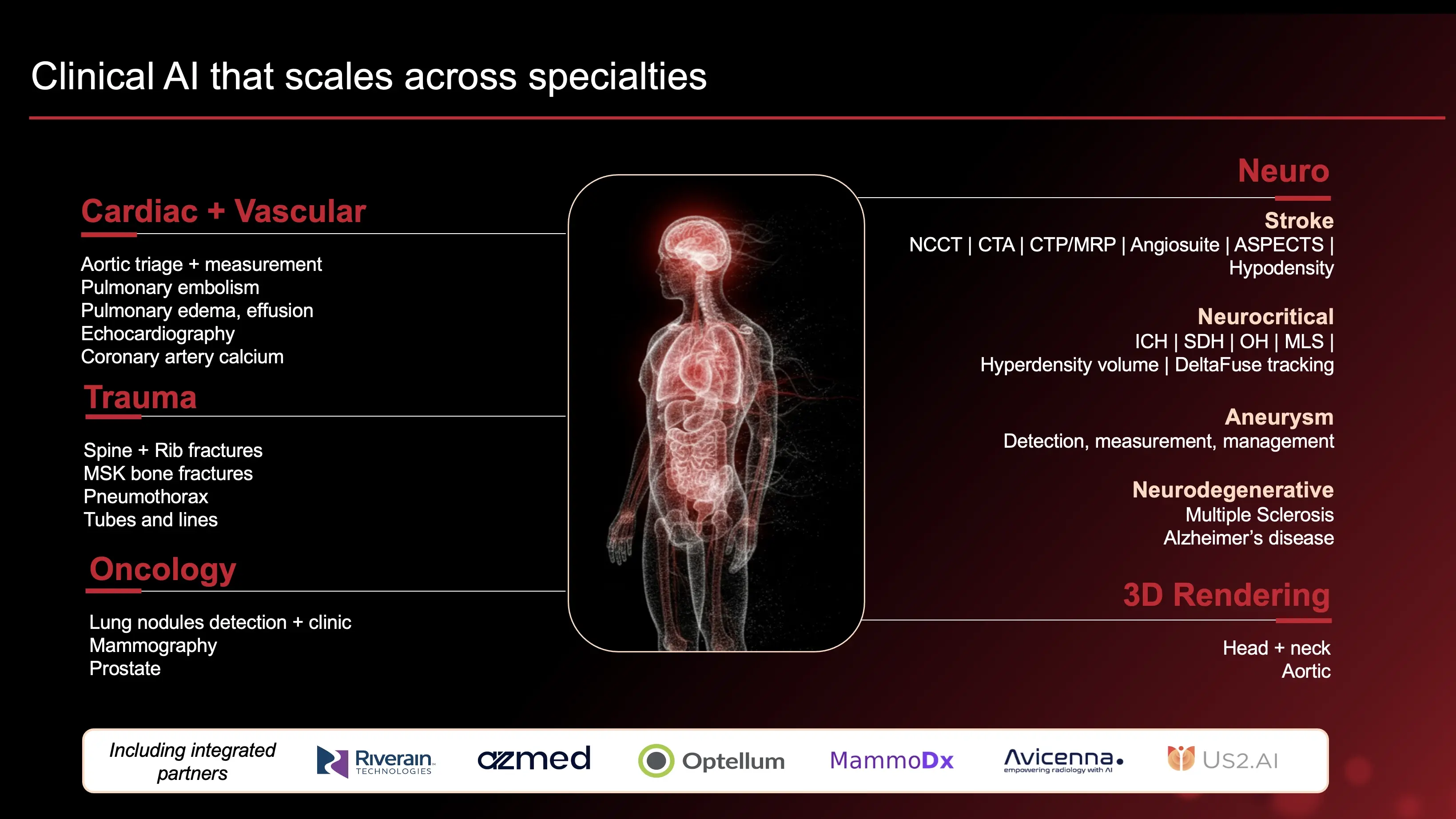
What started as research software eventually evolved into a platform built to reduce variation, improve communication, and support treatment decisions in minutes instead of hours. Today, that same approach continues through deep clinical AI, extending those capabilities across additional disease states and care teams while keeping clinicians at the center of every decision. It now supports radiology across ischemic stroke, hemorrhage, aneurysm, aortic, pulmonary embolism, and more.
What’s next on Radiology Rewired
The conversation on AI in radiology is still unfolding. From imaging automation to workflow optimization and enterprise integration, Radiology Rewired explores how clinicians are shaping that future every day.
Listen to Radiology Rewired on Apple Podcasts, Spotify, or YouTube, or visit RapidAI’s Content Hub for more insights on the technologies and people redefining radiology.
FAQ
How did Dr. Greg Albers’ research change stroke treatment?
His diffusion-perfusion imaging work proved that many strokes progress slowly, allowing physicians to treat beyond the traditional 3-hour window. This directly led to guideline changes and new therapies.
What role does AI play in radiology today?
AI automates image analysis, automated reconstructions, and triage, but human oversight remains critical. Radiologists interpret findings with deep clinical AI context, improving accuracy and reducing diagnostic delays.
What is RapidAI’s mission?
To provide clinicians with real-time, explainable AI tools that improve patient outcomes and streamline care decisions across healthcare service lines.