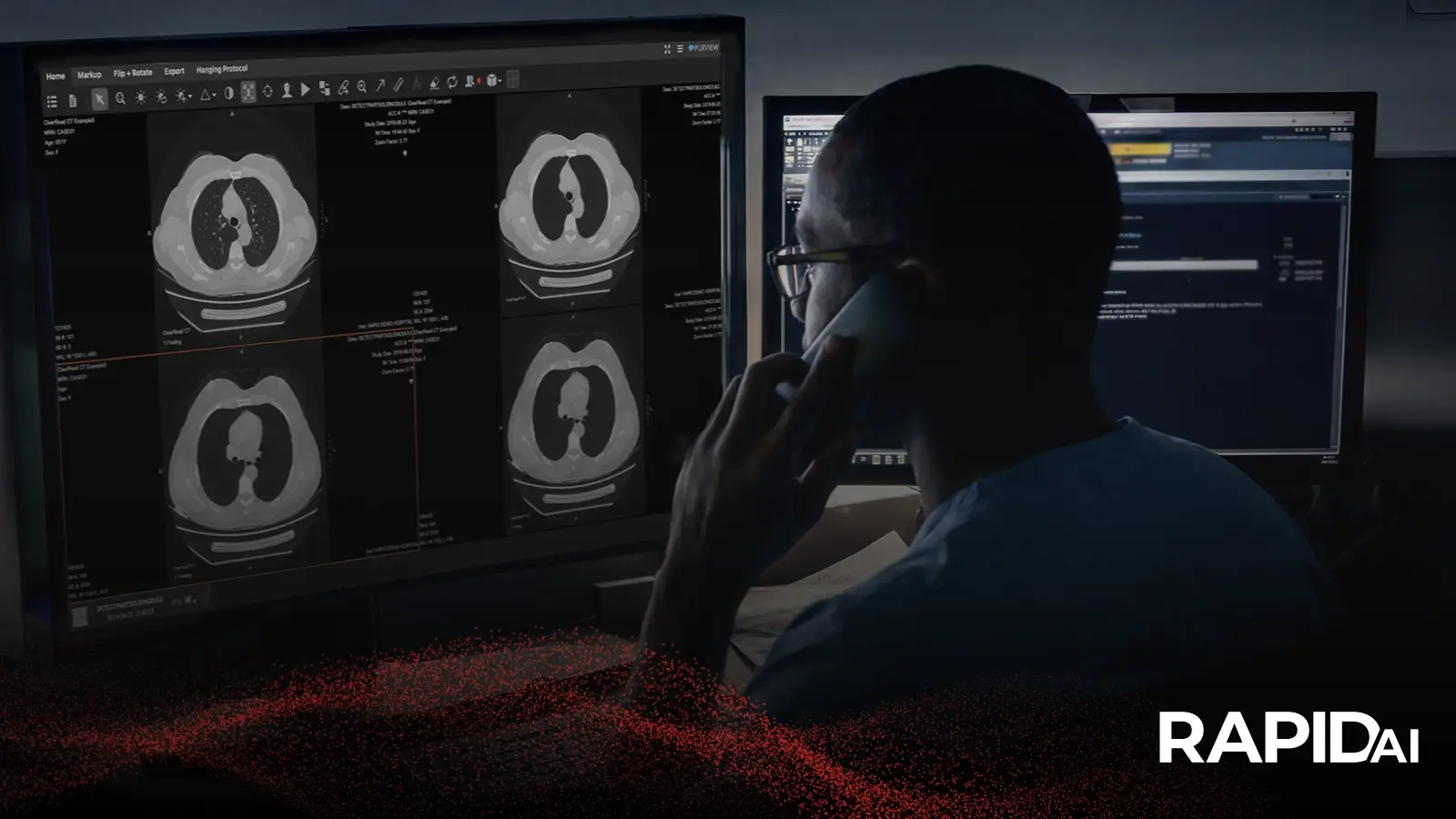

Radiology is at a turning point. Imaging volumes continue to climb, experienced radiologists are leaving the field, and the pipeline of new trainees is not growing quickly enough to meet demand. These pressures are structural, not cyclical. They reflect deeper issues in how the radiology workforce is supported, how work is organized, and how systems shape the demands placed on radiologists every day.
These challenges sit at the center of today’s radiology conversation and are core to Radiology Rewired, RapidAI’s clinician-led podcast series exploring how radiology can evolve with clarity and purpose. In Episode 2, Dr. Jeremy Heit, Director of Neuroimaging and Neurointerventional Radiology at Stanford, outlines how workforce strain intersects with clinical realities, economic pressures, and the urgent need for integrated systems that reduce friction and restore sustainability.
This article distills the broader insights surrounding the radiology workforce and why health systems must rethink the environments that radiologists operate within.
A workforce under pressure
Across hospitals and imaging centers, radiology is experiencing a growing mismatch between what is required and what the workforce can realistically support. Several forces contribute to this imbalance.
Imaging volumes continue to rise
Imaging plays a critical role in emergency triage, chronic disease management, and early detection. Utilization has grown steadily, but the number of practicing radiologists has not kept pace. This widening gap increases daily workloads and reduces the margin for clinical focus.
Residency expansion is limited
Radiology residency positions have grown slowly compared to demand. Many medical students remain uncertain about pursuing radiology due to concerns about burnout, lifestyle constraints, or misconceptions about AI replacing radiologists.
Burnout is becoming a retention crisis
Radiology consistently ranks among the specialties with the highest burnout rates. The issue is not just case volume. It is the accumulation of:
- rising complexity
- fragmented workflows
- constant interruptions
- manual steps that pull attention from diagnostic decision-making
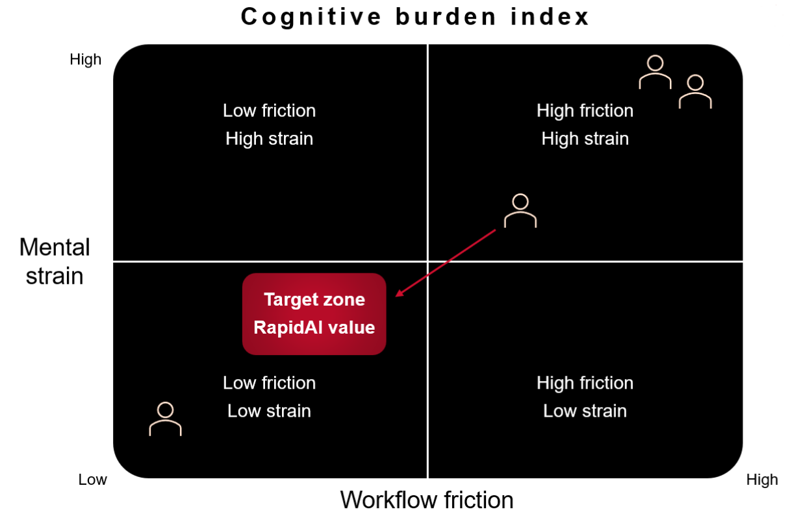
Our own research on cognitive burden highlights how workflow friction compounds mental strain and affects consistency, accuracy, and well-being.
Today’s practice models intensify workforce pressure
Radiology is also undergoing a practice-environment transformation. Traditional private practices, once known for autonomy, partnership tracks, and long-term stability, are far less common. Many radiologists now work within:
- hospital-employed groups
- corporate radiology networks
- private equity–backed practices
These structures can introduce new constraints:
- higher productivity expectations
- decreasing reimbursement rates
- fewer levers for controlling workload
- pressures that reduce time for teaching, collaboration, and quality improvement
For radiologists already experiencing increased volumes and cognitive load, these structural shifts add yet another layer of strain. Workforce sustainability, therefore, cannot be solved by staffing alone. It requires rethinking how radiologists interact with the systems around them.
Radiologists remain essential, but their work is increasingly shaped by system constraints
Despite misconceptions about AI replacing radiologists, the opposite is true. The field needs radiologists more than ever. Imaging complexity is growing, expectations for rapid turnaround are rising, and clinical teams rely on radiologists to synthesize context, nuance, and probability in ways no algorithm can.
The real concern is not whether radiologists will be replaced. It is whether the current environment allows them to keep up.
Radiologists today must balance:
- more studies per shift
- more reconstructions and sequences
- more communication demands
- more administrative friction
- more interruptions
- more output expectations
These pressures are not the result of technology encroaching on clinical roles. They stem from unsustainable systems that have not kept pace with imaging growth. Without intervention, these demands will continue to strain the radiology workforce and accelerate attrition.
System-level solutions, not isolated tools, will determine radiology’s future
Workforce sustainability requires more than incremental improvements or task-based AI tools. Radiologists need systems that reduce cognitive burden, streamline information flow, and consolidate steps across the reading workflow.
Why early AI tools fell short
Many first-generation AI products were designed to detect single findings. While valuable in specific cases, they often:
- added steps for verification
- generated low-value alerts
- created more toggling between systems
- increased the mental burden of deciding what to trust
These tools did not address the real pain points radiologists face daily.
What radiologists need now
Radiology’s workforce challenges require integrated, human-centered solutions that reduce friction and amplify clarity. Effective systems:
- prioritize cases intelligently
- deliver consistent, clinically meaningful context
- minimize manual measurements
- eliminate unnecessary clicking
- surface the right information at the right moment
- unify the reading environment
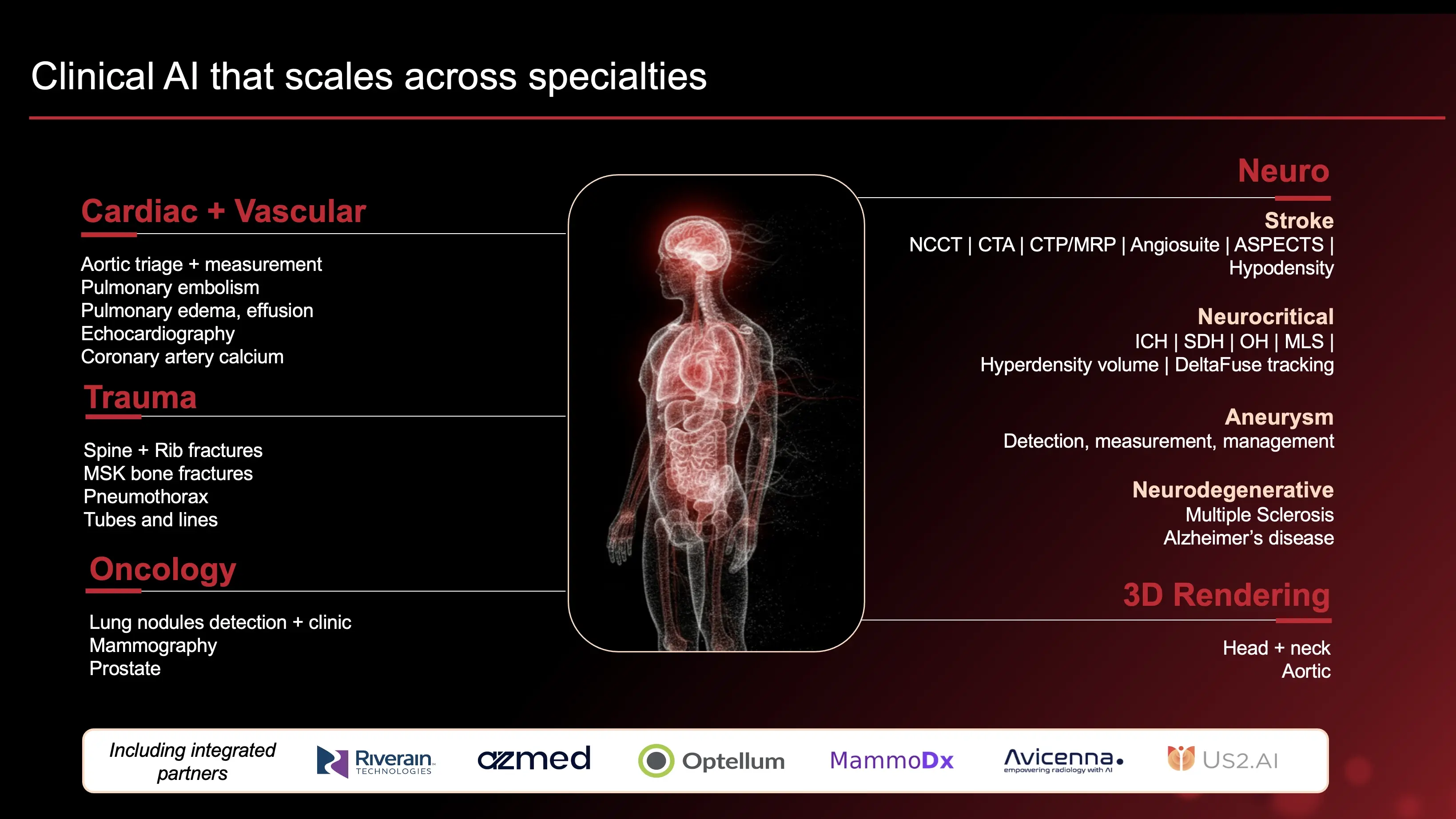
This is where platform-level solutions like Navigator Pro become essential. By combining worklist prioritization, AI findings, structured reporting, and real-time collaboration in a single workspace, Navigator Pro helps radiologists protect their focus and reduce unnecessary cognitive burden.
Similarly, automated reconstruction with Lumina3D removes one of the most time-consuming bottlenecks in CTA workflows, reducing mental effort and accelerating clarity.
The value is not in performing tasks faster. The value is in reducing the hidden workload that erodes accuracy, clarity, and well-being.
Building sustainable radiology departments
The most effective radiology leaders today understand that workforce stability cannot rely solely on hiring or productivity increases. Sustainability requires investing in the systems that support radiologists throughout their day.
Reduce cognitive burden
Clearer interfaces, fewer manual steps, and reliable automation help radiologists maintain consistency and focus.
Unify fragmented workflows
When worklist prioritization, AI insights, and structured reporting live in one place, radiologists spend less time tracking information and more time interpreting images.
Design around the human experience
Radiologists need reading environments that reduce noise and surface the most important data first. Human-centered design is a retention strategy, not an aesthetic choice.
Build infrastructure that scales
The future of radiology depends on systems that can absorb rising volumes without increasing strain on radiologists. Integrated platforms and deep clinical AI provide the foundation for that stability.
Radiology Rewired brings these conversations to the forefront, highlighting how leaders like Dr. Jeremy Heit view the path forward. Workforce sustainability will not be solved by asking radiologists to do more. It will be solved by designing systems that allow them to do their best work with clarity, confidence, and long-term resilience.
Listen to the full conversation
To hear the discussion that inspired this article, listen to Episode 2 of Radiology Rewired featuring Dr. Jeremy Heit.
Listen to Radiology Rewired: Episode 2
YouTube | Apple | Spotify
FAQs
Why is the radiology workforce under pressure?
Imaging volumes are rising, residency expansion is modest, and burnout rates are high due to workflow friction and mental strain, both of which fuel cognitive burden.
Will AI replace radiologists?
No. AI reduces mental burden and supports decision-making, but radiologists remain essential for clinical interpretation and contextual judgment.
What contributes most to radiologist burnout?
Rising volumes, fragmented workflows, manual steps, case complexity, interruptions, and rising expectations all increase cognitive burden.
How can hospitals reduce workflow friction for radiologists?
Unified solutions like Navigator Pro consolidate worklists, auto reporting, and AI insights into one space, reducing duplicated effort and manual verification.
What will shape the future radiology workforce?
Platform-level AI that goes beyond triage, automated 3D reconstruction, human-centered workflow design, and integrated communication systems.