



Listen on:


Episode overview
Radiology remains one of the most essential specialties in modern medicine, yet many medical students and residents still hear the same warning: “AI is coming for radiologists.” That perception is shaping career decisions, training experiences, and how the next generation approaches image interpretation.
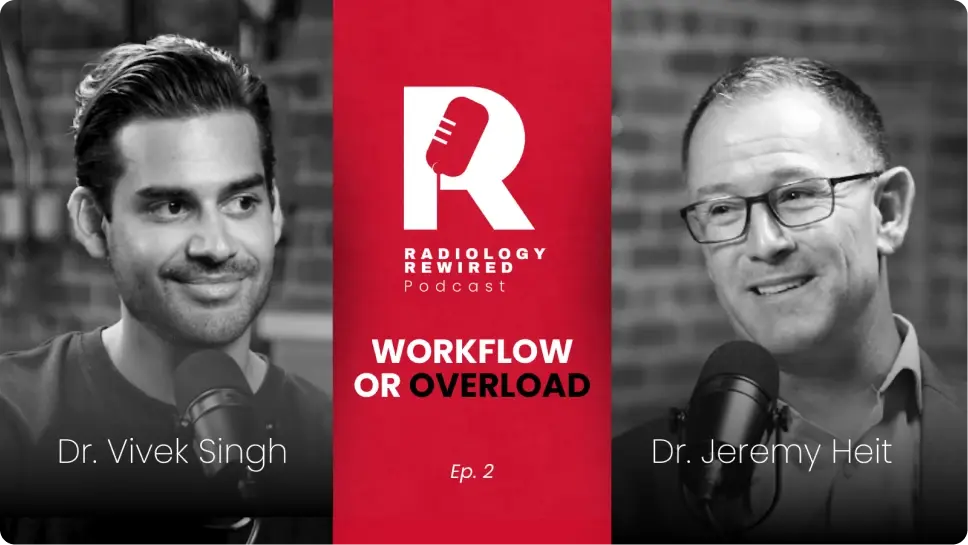
In episode 3 of Radiology Rewired, Dr. Vivek Singh is joined by neuroradiologists Dr. Dhairya Lakhani and Dr. Vivek Yedavalli to discuss how AI is already influencing radiology training and why the real risk is not automation, but how future radiologists are taught to work with AI.
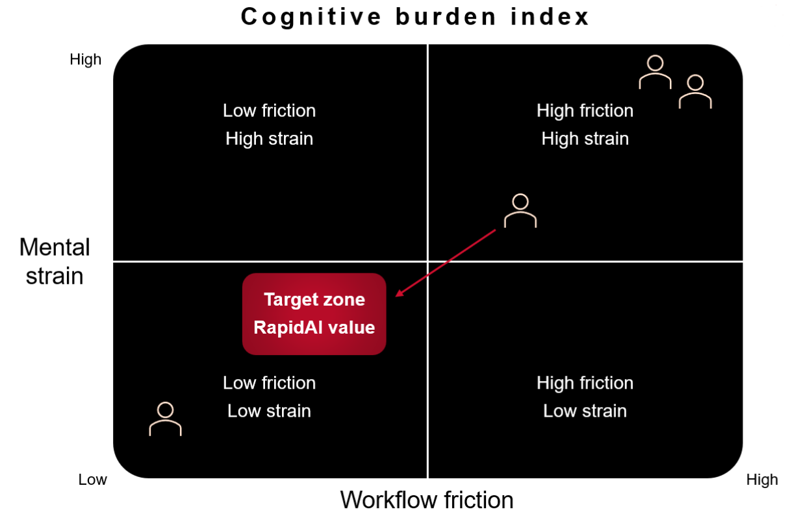
The conversation focuses on trainees and early-career radiologists. The group explores how poorly designed AI can increase cognitive burden, encourage cognitive offloading, and weaken independent clinical reasoning if it is introduced without guardrails. They also discuss how AI can support learning when it provides context early, reinforces pattern recognition, and helps trainees focus on what matters most.
This episode offers a clinician-led perspective on how residency programs, departments, and health systems can adopt AI in ways that strengthen training, protect clinical judgment, and build a more sustainable radiology workforce.
In episode 3 of Radiology Rewired, Dr. Vivek Singh is joined by neuroradiologists Dr. Dhairya Lakhani and Dr. Vivek Yedavalli to discuss how AI is already influencing radiology training and why the real risk is not automation, but how future radiologists are taught to work with AI.
The conversation focuses on trainees and early-career radiologists. The group explores how poorly designed AI can increase cognitive burden, encourage cognitive offloading, and weaken independent clinical reasoning if it is introduced without guardrails. They also discuss how AI can support learning when it provides context early, reinforces pattern recognition, and helps trainees focus on what matters most.
This episode offers a clinician-led perspective on how residency programs, departments, and health systems can adopt AI in ways that strengthen training, protect clinical judgment, and build a more sustainable radiology workforce.
Episode highlights
00:00
Introduction: why students still worry about AI
01:30
Imaging demand, burnout, and training pressure
03:45
How AI narratives affect the radiology pipeline
06:10
Cognitive burden and cognitive offloading in trainees
09:00
Using AI to support learning without replacing judgment
11:45
Workflow design and training-first systems
14:30
What residents need to graduate confident and independent
17:30
Preparing the next generation of radiologists



.png)