
An aortic aneurysm rarely announces itself. It grows quietly, often for years, until a scan ordered for an unrelated reason happens to catch it. That moment of incidental discovery should mark the start of a reliable surveillance path. Too often, it marks the start of a gap that never closes. This is why aortic surveillance is less a technical problem than a follow-through problem.
In most cases, the imaging already exists. The measurement standards exist. What tends to break down is everything that happens between one scan and the next. Clinicians bury recommendations in reports, care teams fail to schedule follow-up appointments, and healthcare systems lose track of patients. For a condition where rupture carries mortality rates as high as 90 percent, that gap is not a minor administrative issue. It is a patient safety issue.
Where aortic surveillance actually breaks down
A correct diagnosis and a functioning surveillance program are not the same thing. Health systems document guidelines and train radiologists to follow them, then assume the process holds. But guidelines only govern the moment of interpretation. They say nothing about the months and years after, and that is where surveillance quietly comes apart.
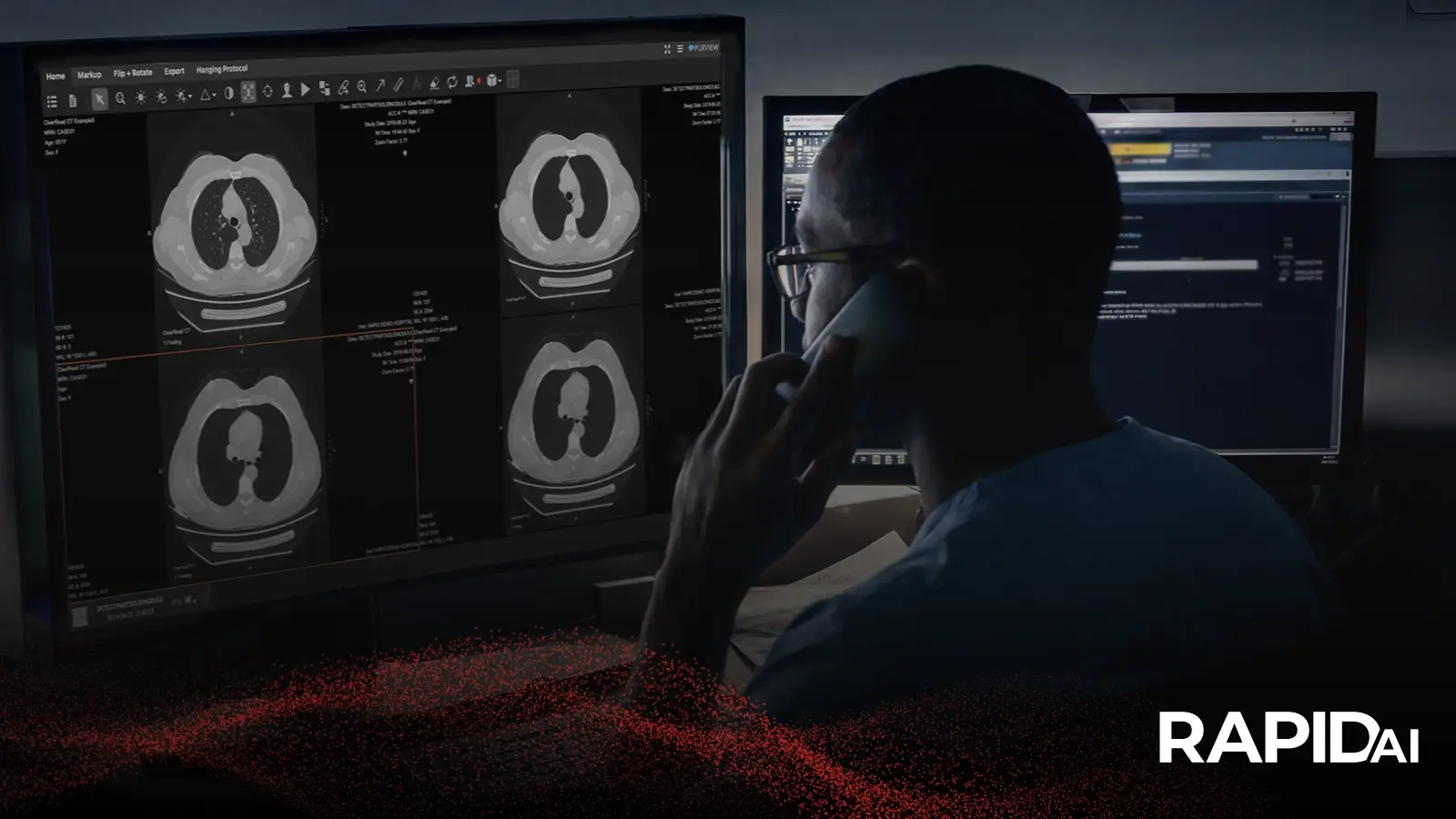
Take a common scenario: a chest CT for pneumonia reveals an incidental 4.2 cm ascending aortic aneurysm, with follow-up recommended in six to twelve months. From there, everything depends on manual follow-through, tools like spreadsheets, sticky notes in the EHR, and radiologist memory that were never built to scale.
Patients move between hospitals without prior measurements following them. Radiologists reviewing follow-up studies may lack access to earlier zonal measurements, making true growth hard to distinguish from measurement variability. Referring providers, juggling competing priorities, can easily miss a recommendation buried in a months-old report.
Multiply this across tens of thousands of annual studies, and the pattern becomes structural. This is not a diligence problem. It reflects the quiet failure mode of aortic surveillance: providers identify the condition correctly but fail to follow through over time.
What automated aortic surveillance looks like
Automated tracking changes the surveillance equation in three practical ways. It finds patients who might otherwise be missed. Automated analysis reviews contrast and non-contrast CT scans across the network, including post-treatment studies. It helps identify aortic disease regardless of the original imaging indication.
Similarly, it standardizes measurement, generating the full set of guideline-based zonal maximum and landmark measurements consistently, which reduces variability between readers. And it also makes change over time visible at a glance. Automatic side-by-side comparisons with prior studies reveal whether an aneurysm is stable, growing, or nearing an intervention threshold. Clinicians no longer need to retrieve old exams or remeasure them by hand.
What the guidelines actually require
Current clinical guidance is specific about surveillance intervals. The 2022 ACC/AHA Guideline for the Diagnosis and Management of Aortic Disease notes that surveillance imaging with echocardiography, CT, or MRI is reasonable at six to twelve months after initial detection. Then, it’s still acceptable every six to twenty-four months thereafter if the aneurysm remains stable. It also emphasizes that surveillance imaging should ideally use the same modality. The guidelines also recommend performing imaging consistently over time to help clinicians distinguish true aortic growth from normal measurement variation.
None of these thresholds matter without consistent measurements. The guideline emphasizes using the same imaging modality and measurement approach over time. Consistent imaging distinguishes true aneurysm growth from variation between readers, scanners, and protocols. The guideline also recommends multidisciplinary aortic teams to coordinate care instead of relying on isolated decisions at each visit.
Building surveillance into the enterprise, not just the read
The health systems that get aortic surveillance right tend to treat it as an operational workflow, not just a clinical judgment made at the point of image interpretation. That means connecting detection, measurement, comparison, and follow-up coordination into a single continuous process, backed by infrastructure that scales across every site in the network rather than living in one radiologist's inbox.
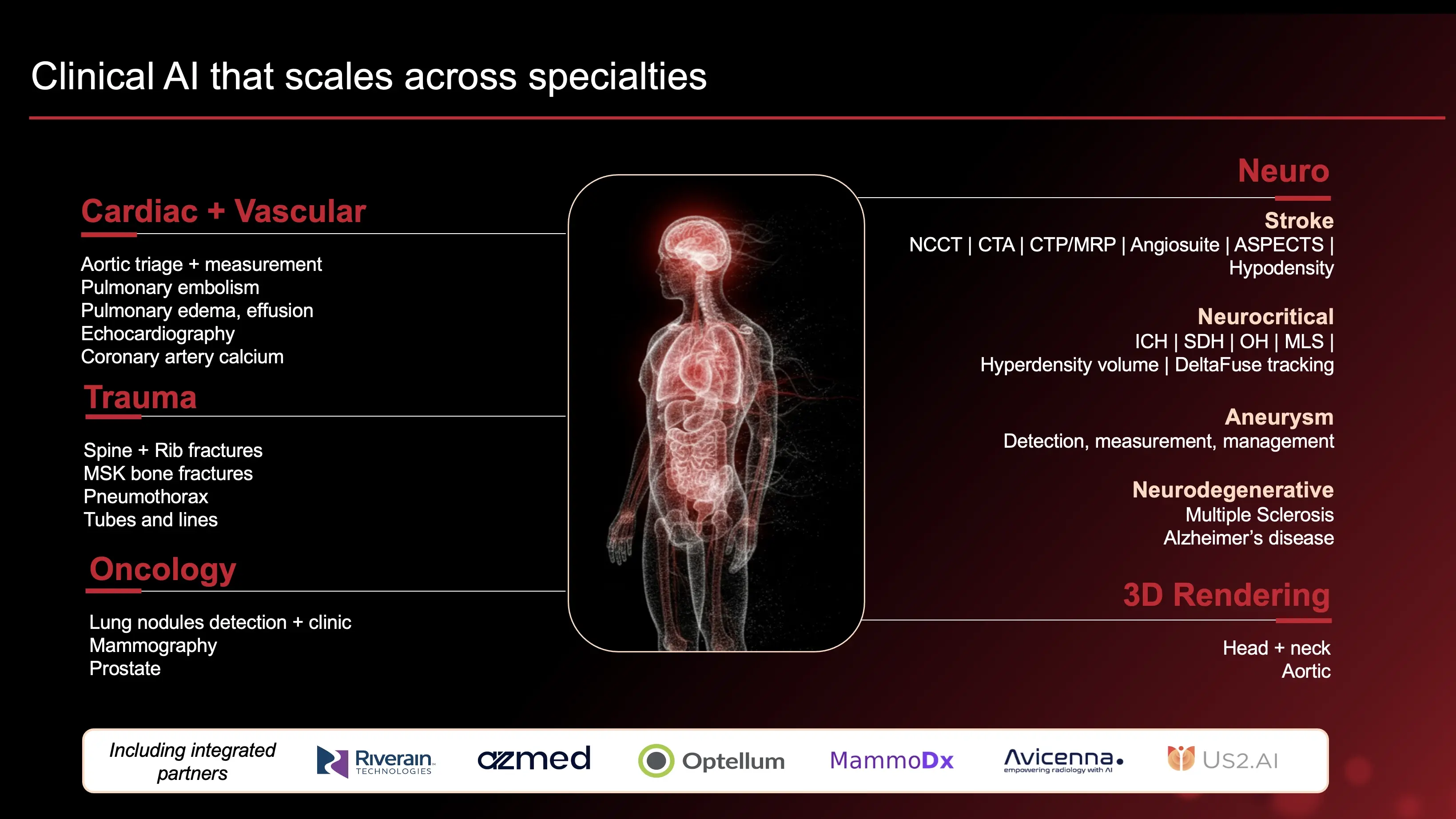
This is the thinking behind RapidAI's approach to aortic disease management. Built on the Rapid Enterprise Platform, Rapid Aortic automatically analyzes eligible CT scans across the network to help identify aortic disease, generates the complete set of guideline-based zonal and landmark measurements, and provides automatic side-by-side comparison to prior studies so care teams can track change with confidence. It reflects the same foundation of rigorous clinical science that has long defined RapidAI's work in neurology, now extended to help hospitals find and follow their aortic patients with the same discipline.
Closing the loop on aortic surveillance
Aortic disease is patient and unforgiving in equal measure. It gives health systems time to intervene, but only if the surveillance process actually holds up over months and years, not just at the moment of the initial read. Automated tracking will not replace clinical judgment, and it should not be expected to. What it can do is make sure the right patients stay visible, the right measurements stay consistent, and the right follow-up actually happens.
If your team is looking at ways to strengthen aortic surveillance across your network, we would welcome the conversation. Send us a message today and see how Rapid Aortic fits into your existing workflow.
Frequently asked questions
How often should aortic aneurysms be monitored once they're found? According to the 2022 ACC/AHA Guideline for the Diagnosis and Management of Aortic Disease, follow-up imaging is reasonable six to twelve months after initial detection. If the aneurysm remains stable, intervals can extend to every six to twenty-four months after that.
Why do so many incidentally found aneurysms fall through the cracks? The imaging and measurement standards typically aren't the problem. The breakdown happens in the space between scans, when recommendations get buried in reports, follow-up appointments never get scheduled, or patients move between departments and hospitals without their prior measurements following them.
What does automated aortic surveillance actually change? It addresses the tracking problem in three ways: identifying patients who might otherwise be missed by reviewing contrast and non-contrast CT scans across a network regardless of the original imaging indication, standardizing measurements to reduce variability between readers, and making change over time visible through automatic side-by-side comparisons with prior studies.