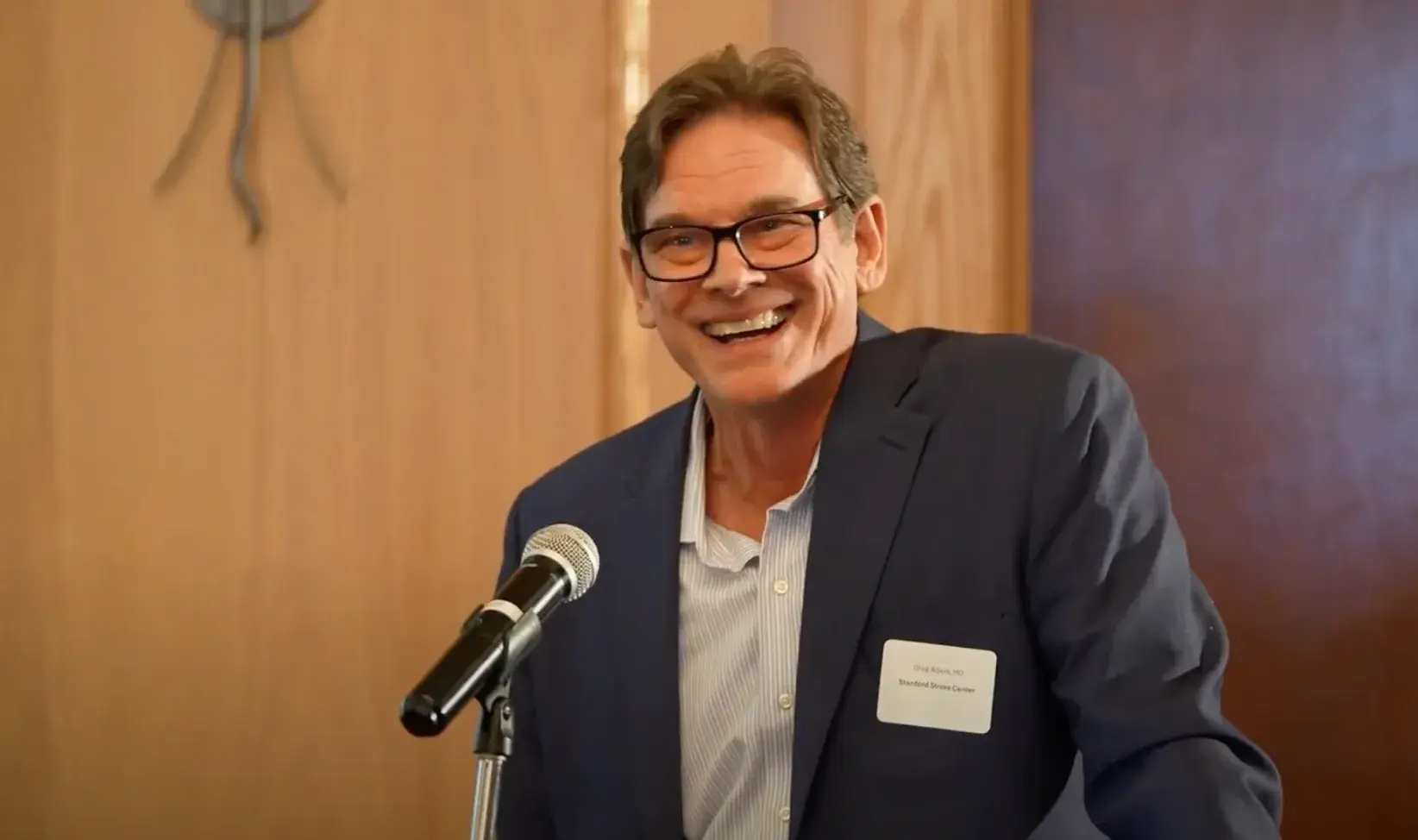
Dr. Sabareesh Natarajan, a neurosurgeon trained in open vascular, endovascular, and radiation treatment of the brain, and founder and CEO of the Brain, Spine & Vascular Neuroscience Institute in San Diego, has built his practice in partnership with Sharp HealthCare on a simple premise: stop treating neurosurgery, neurology, and neurointervention as separate disciplines competing for the same patient.
Here's how he sees medical AI helping care teams put that premise into practice: coordinating faster across specialties, sharpening decisions once a patient is identified, and extending that same standard of care to people who don't live near it.
Single medical AI platforms are dissolving the silos in acute stroke and critical care.
A decade ago, a stroke patient moved through a chain of disconnected phone calls — ED physician to radiology to neurologist to neurosurgeon, often with conflicting instructions and no shared record of what had already been decided. Dr. Natarajan has seen how shared medical AI platforms that connect the ED, stroke team, and specialists are closing that gap, giving everyone visibility into the same information and cutting the time deficits that used to separate diagnosis from action. The tradeoff, he notes, is that more voices in the loop still requires a clear owner of the decision.
Medical AI's next phase isn't pattern recognition, it's precision medicine.
Early clinical AI was built to answer a binary question: normal or abnormal. Dr. Natarajan believes the more valuable phase is already underway: radiomic and genomic correlation that can flag a tumor's likely genetic profile from imaging alone, AI-guided robotics that can safely clear the majority of bone in a skull-base case before a surgeon finishes the last margin by hand, and closed-loop systems that manage a critical-care patient's blood pressure and sedation more precisely.
Robotics and teleoperation, powered by medical AI, are how that expertise reaches patients who don't live near it.
Dr. Natarajan points to real examples already in motion, including a remote thrombectomy performed across international borders, as evidence that AI-enabled navigation and teleoperation can extend specialist-level care to rural and underserved regions without requiring the patient to travel to it. The regulatory and licensing questions are real, he says, but the trajectory is clear.
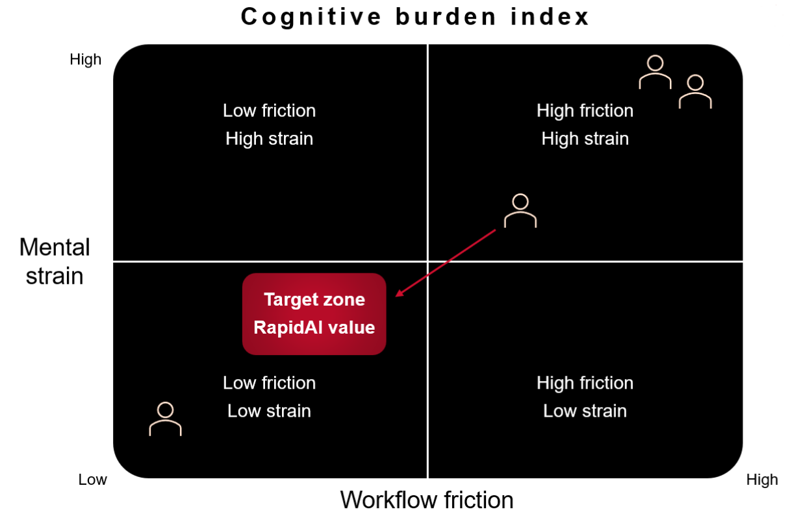
The rising presence of medical AI in day-to-day practice is helping reduce cognitive burden.
For Dr. Natarajan, the throughline across all of it is cognitive load. Between hospital rounds, surgeries, an outpatient clinic, and a constant stream of calls from his team, the volume of decisions a physician carries in a single day is difficult for anyone outside medicine to appreciate, and difficult to sustain over a career. AI that documents a visit, flags what actually needs attention, or clears the routine 90% of a procedure isn't replacing clinical judgment, it's protecting the bandwidth physicians need to exercise it where it matters most.
Want to hear more about how medical imaging AI is impacting neurosurgery? Listen to Season 2, Episode 3 of Radiology Rewired with Dr. Sabareesh Natarajan — available now at YouTube, Apple, and Spotify.
FAQs
Q. How is AI helping break down silos in stroke and critical care?
Medical AI platforms now connect the ED, stroke team, neurologists, and neurosurgeons on a single view of the patient, replacing the disconnected phone calls that used to separate diagnosis from action. This shortens the time between identifying a stroke or hemorrhage and getting the right specialist involved, though someone still needs to own the final decision.
Q. How is AI changing brain tumor diagnosis and treatment?
AI is enabling radiomic and genomic correlation, allowing imaging alone to suggest a tumor’s likely genetic profile before histology confirms it. That information increasingly informs surgical planning, including AI-guided navigation that flags “no-fly zones” around critical structures during the procedure itself.
Q. Can AI-guided robotics extend specialist neurosurgery care to remote areas?
Yes. AI-enabled navigation and teleoperation are already being used for procedures like remote thrombectomy performed across international borders. Dr. Natarajan expects this to expand access to specialist-level neurosurgical and neurointerventional care in rural and underserved regions, though licensing and regulatory questions still need to be resolved.