
Dr. Vivek Singh talks with Scott Becker, founder of Becker's Healthcare, about how health system leaders decide which AI tools to adopt and how those decisions land with the clinicians who use them every day. Becker has spent three decades in conversation with health system executives, and his background as a lawyer and CPA shapes a practical view of what makes clinical AI stick. Here are three takeaways from the conversation.
Tools clinicians help choose are the tools clinicians use
Becker estimates that in roughly 90% of cases, deployments go better when clinicians co-lead them. Tools pushed down from the executive suite tend to meet resistance, and ease of use sets the pace for everything that follows launch. Dr. Singh points to a familiar radiology example: a tool that requires a separate login and another screen rarely survives. Becker also cautions leaders against asking clinicians to beta test too many products, since every disappointing pilot spends trust that is hard to earn back.
Health systems are consolidating around clinical AI platforms
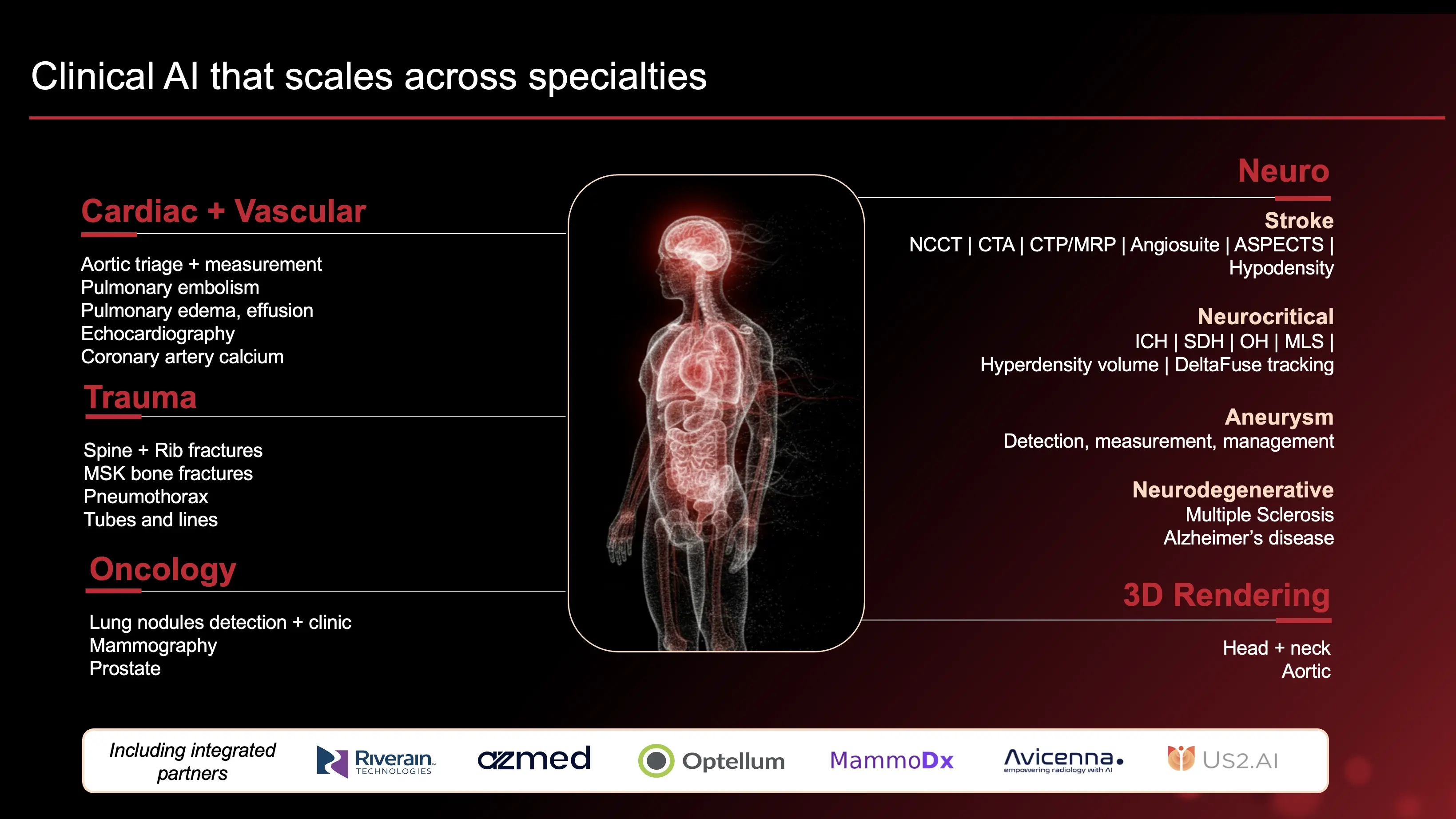
Most great companies start with a point solution, yet Becker notes that large systems do not want to manage thousands of them. Some run around 2,000 applications, and new CIOs often prioritize shrinking that number because of cybersecurity risk, training demands, and support costs. Many organizations are Epic first, which means they check whether their EHR can solve a problem before looking elsewhere. A point solution wins when it fills a need the system cannot do without, but consolidation is preferred for consistency and ease of management. This is the thinking behind the Rapid Enterprise Platform, which brings radiology AI, care coordination, and patient management together on one platform. Becker's advice to vendors is to define the cost benefit clearly and to stay close to customers after go-live with a team that resolves problems quickly.
AI should return time to clinicians while physicians stay in charge of care decisions
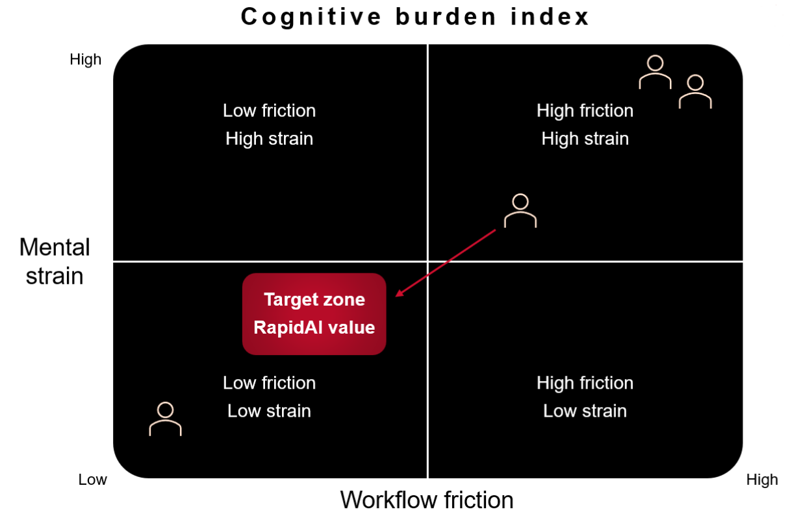
Becker describes one of the worst things a hospital leader can say: AI gave you an hour back, so you can work another hour. Clinicians need breathing room, and he argues that burnout cannot be fixed without capacity. With roughly 900,000 practicing physicians serving 350 million people, he expects nurse practitioners and physician assistants working at the top of their licenses to use AI for screening and summarizing, so specialist time goes to the cases that need it most. He calls the model trust plus verify: AI screens and summarizes, and physicians review the results and make the call. In his view, AI makes a good radiologist better by helping them catch more findings while easing the pressure of rising imaging volumes. Radiologists and clinicians can make that call with greater confidence when the AI behind it is backed by published evidence. RapidAI is the most clinically validated imaging AI platform on the market, with more than 800 peer-reviewed publications, including 11 in the New England Journal of Medicine.
For radiology leaders, Becker's advice comes down to a simple test. AI earns its place when it is easy to use, solves a defined problem, shows measurable benefit, and gives clinicians more room for the judgment that only they can provide. Tools that fit the way radiologists already read and deliver less work, not more, are the ones health systems and clinicians will both back.
Interested in seeing how an enterprise platform spanning radiology AI, care coordination, and patient management can enable better outcomes and access to care? Explore the Rapid Enterprise Platform.
Want to hear the full conversation? Watch Season 2, Episode 6 of Radiology Rewired with Scott Becker, available now on YouTube.
FAQs
Why does clinician involvement matter when health systems adopt AI?
Becker says deployments go better when clinicians co-lead them instead of receiving tools from the top down. Clinicians who help select and shape a tool are more likely to use it, and respected physician champions such as department chairs build confidence faster than executive mandates. A tool that is hard to access or poorly integrated into daily reading tends to be dropped, even when the technology is strong.
Why are health systems moving from point solutions to clinical AI platforms?
Every additional application adds cybersecurity exposure, training needs, and support demands. Systems want a smaller set of enterprise solutions that many clinicians use, and many check their existing platform before adding a new vendor. Point solutions can still succeed when they meet an important need that the broader platform does not. The Rapid Enterprise Platform is built on this approach, connecting radiology AI, care coordination, and patient management on one platform.
What should hospital executives ask before adopting a clinical AI tool?
Becker starts with who else is using the tool and whether he can talk to them. From there, he looks for a clearly defined cost benefit, ease of deployment beyond a small pilot group, and a vendor team that supports clinicians after go-live. Return on investment can be indirect, as with ambient listening, where the payoff shows up in physician retention.