

Cardiac solutions
Deeper cardiac insights with less manual work
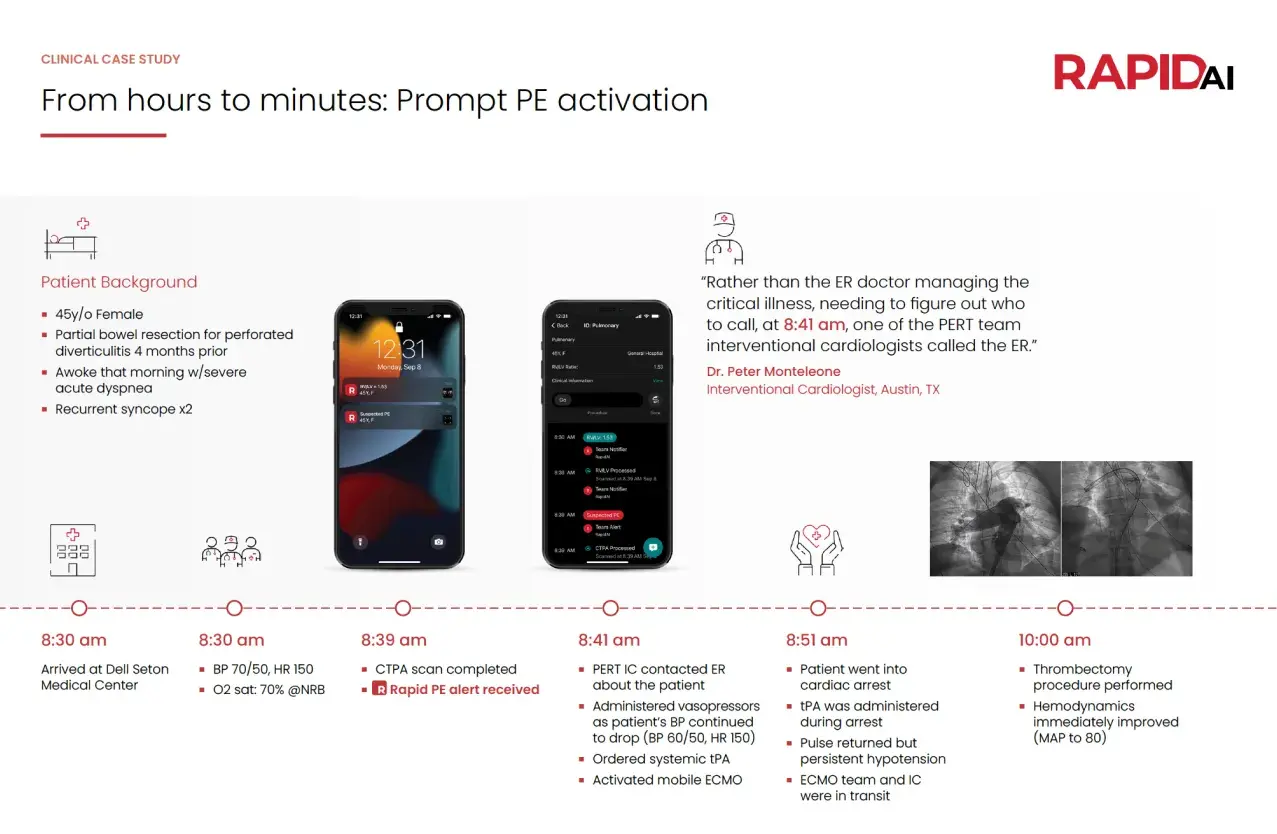
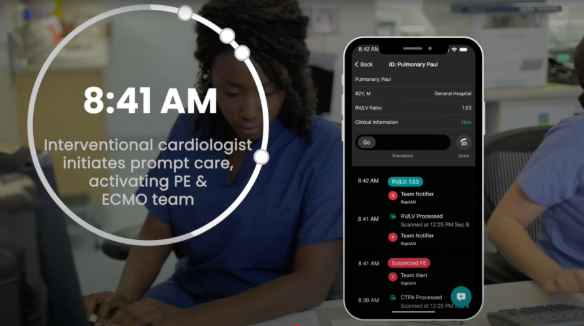
Face the challenges of PE care head-on

Awareness of intervention candidates
Only 10-15%1 of PE patients are treated with advanced therapies.

Delayed care due to uncoordinated workflows
5% reduction in mortality risk for every hour saved diagnosing PE.

Lack of data collection despite prevalence
100,0002 people die of blood clots each year.
Be the champion
of AI-driven change
-
Get promptly notified of suspected PE patients
-
Streamline workflows with AI results, source imaging, and clinical data–plus seamless communication—all in one platform
-
Refine your PE program based on data from Rapid Insights
Rapid PE clinical solutions
Rapid PE Triage & Notification

Rapid PE RV/LV

Rapid iPE

Expand access to care


-
Increase patient capture
-
Optimize transfers
-
Accelerate trial enrollment
Improve workflow efficiency
-
Expedite care pathways
-
Simplify access to info and imaging
Drive confident decisions with data
-
Track and analyze PE metrics and patient data effortlessly
-
Automate data collection via EHR integration
-
Conduct research efficiently
Expand access to care
Improve workflow efficiency
Drive confident decisions with data
Al-driven clinical decision support in the palm of your hand

EMR integration for a single source of truth

Team workflow across the entire care continuum (HIPAA compliant)

Data analytics to drive feedback and operational efficiency

Al-driven clinical decision support in the palm of your hand
EMR integration for a single source of truth
Team workflow across the entire care continuum (HIPAA compliant)
Data analytics to drive feedback and operational efficiency
Testimonials

It is truly remarkable to see how, overnight, a single technology [RapidAI] has changed our ability to care for those patients efficiently, effectively, quickly and safely."

Where this AI piece will be incredibly helpful is that it’ll be a win-win-win for everyone. The referring hospital prevents leakage of patients when they can keep the patients who don’t need to be treated elsewhere. At the same time, the patient and his family members don’t have to travel or pay for separate ambulance rides to come to our center. Thirdly our hospital is limited in beds and we eliminate the need to occupy a bed for patients with low risk PE who can be managed with anticoagulation."
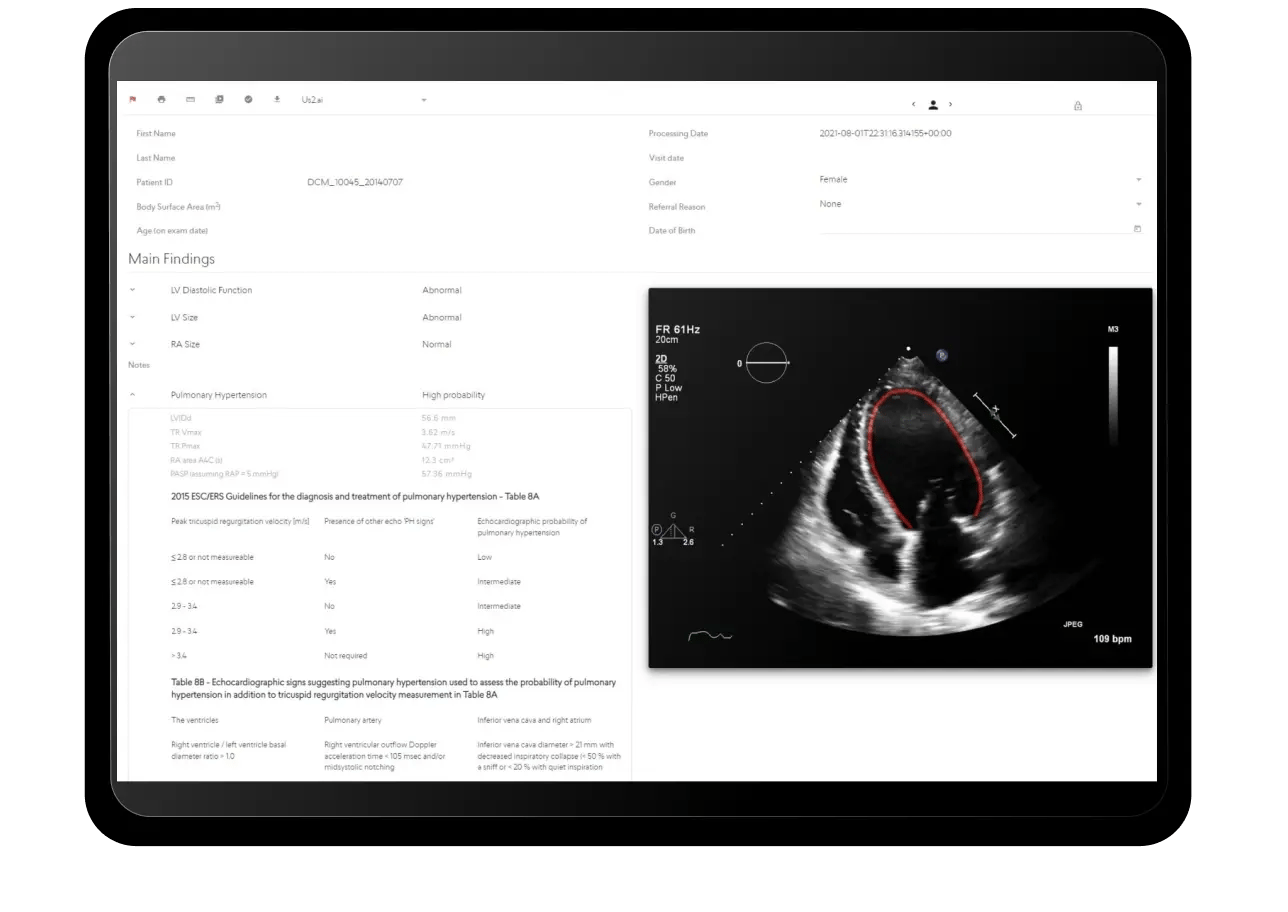
AI-automated echocardiography
Generate consistent, reproducible results and editable, guideline-based reports in approximately two minutes, reducing manual workload and helping echo labs increase capacity.
-
Wide disease coverage: Heart failure, Valvular heart disease, Hypertrophic Cardiomyopathy, Pulmonary hypertension, Cardiac amyloidosis
-
Analyzes and measures heart structure and function of all heart chambers for 40+ measurements
-
Consistent, reproducible1 results help reduce inter-reader variability
-
Fully editable, guideline-based reports are integrated into PACS
Developed by US2.ai
saved (70%) per study measurement + reporting2
studies per sonographer shift (+18%)3
reduced user fatigue2
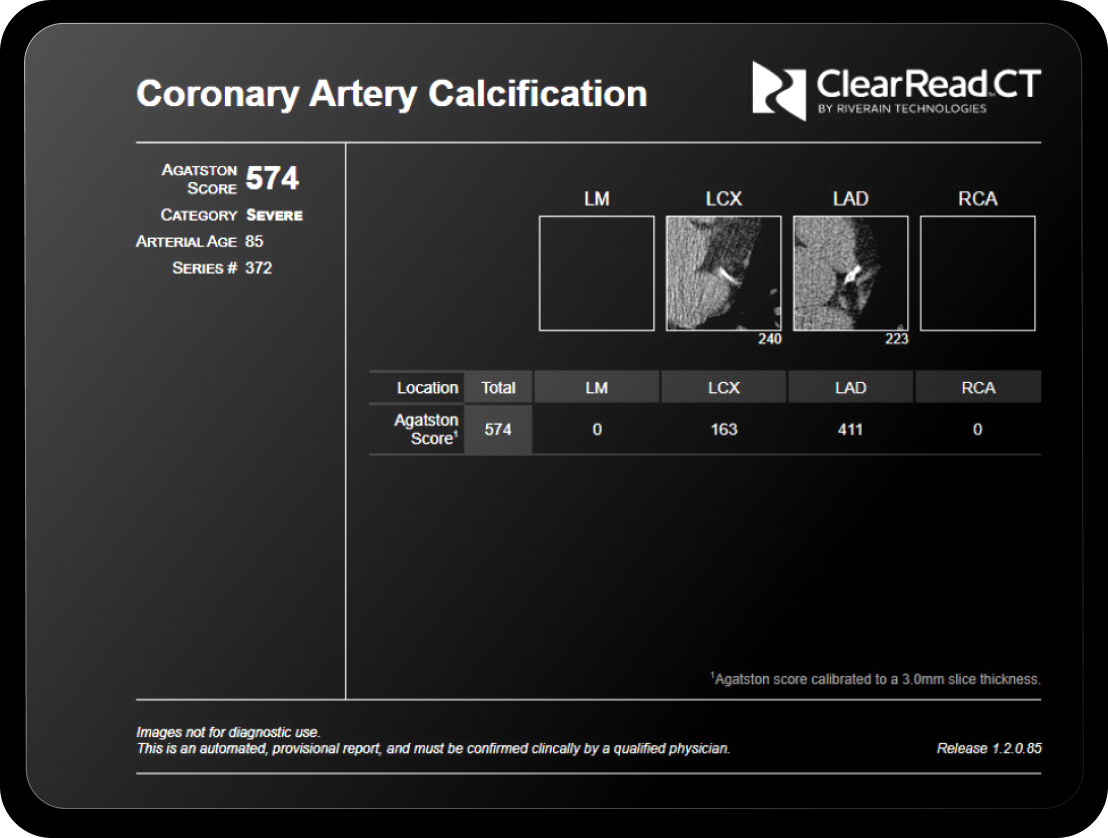
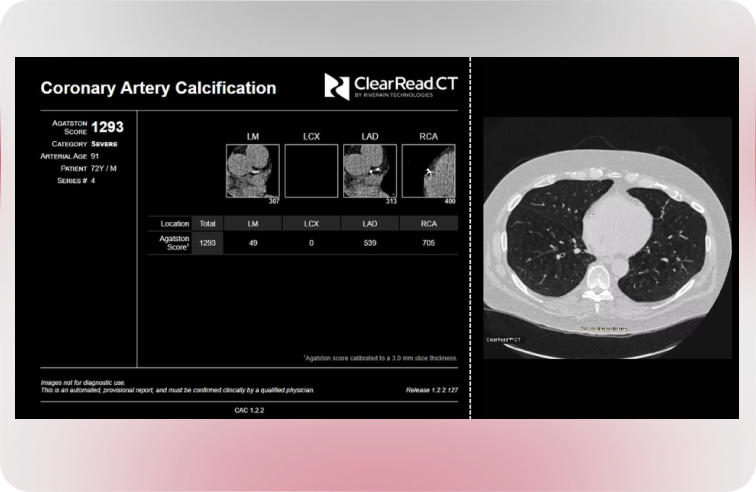
Coronary artery calcification
Automatically detect and quantify coronary calcium to help uncover previously unrecognized cardiovascular risk without requiring a dedicated cardiac CT exam.
-
Identify more asymptomatic, yet at-risk patients on ungated NCCT chest scans
-
Normalized imaging reduces noise for high-accuracy assessment
-
Automatically quantify and report Agatston score in reports to support radiology and cardiovascular risk assessment
Developed by Riverain
Agatston score correlation to gated-CT4
Agreement with expert radiologists5