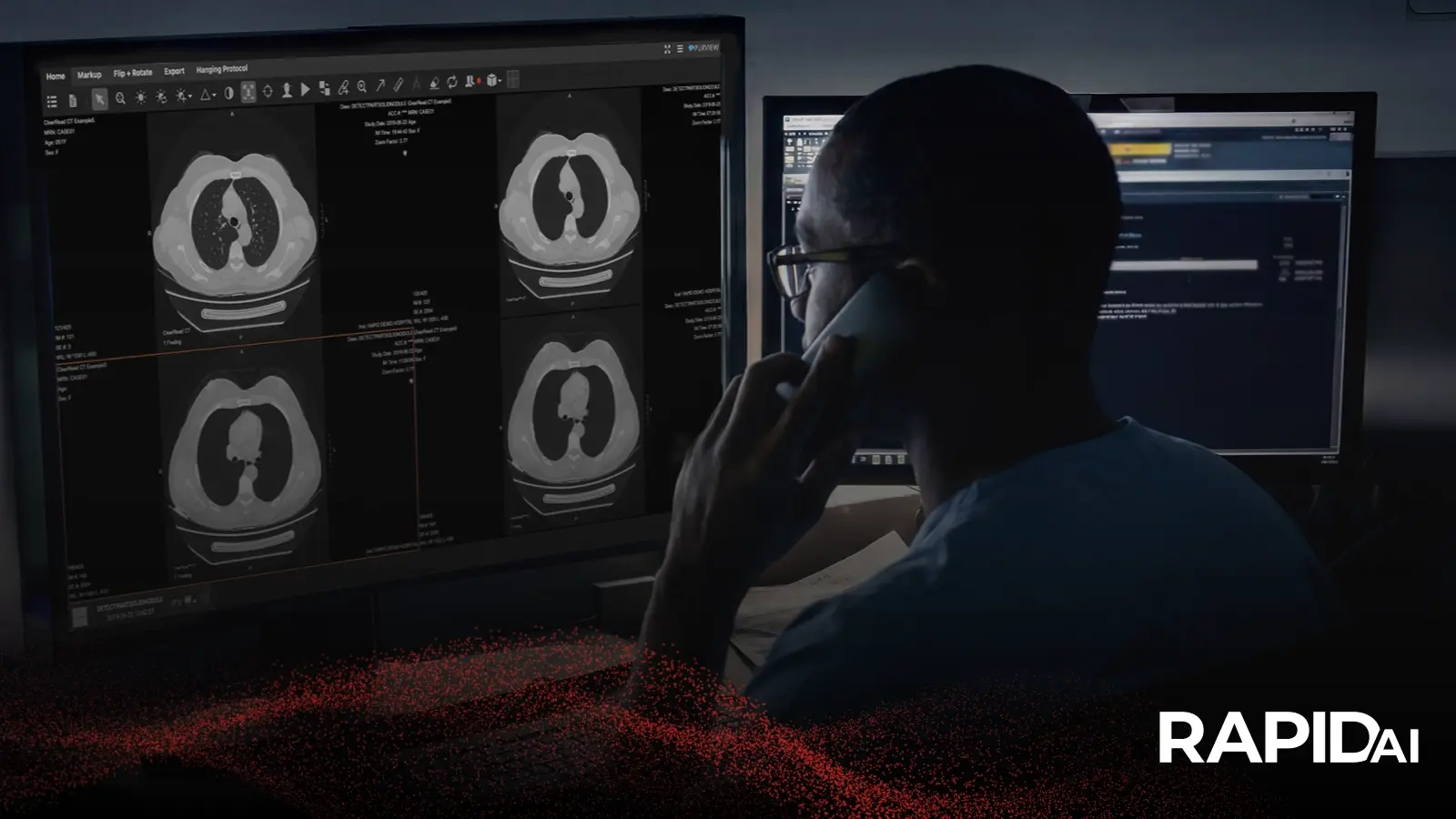

A lung nodule is found. Who makes sure the patient gets follow-up care?
A patient gets a CT for chest pain, abdominal pain, or a trauma workup. The radiologist reads it and notes a lung nodule in the report. The patient goes home, the ordering clinician moves on, and the finding sits in a report that no one is assigned to act on.
This happens constantly. An estimated 60% of incidentally found lung nodules are lost to follow-up.2 Lung cancer is the leading cause of cancer death in the United States and worldwide,1 and every one of those missed follow-ups is a missed chance at earlier diagnosis.
Optellum recently announced that its Virtual Nodule Clinic (VNC) with Lung Cancer Prediction (LCP) AI is integrated with the Rapid Enterprise™ Platform. Here is why we think it matters, and who it matters for.
The hard part is what happens after the read
Incidental nodules are rarely a detection problem. The finding is usually already in the report. The gap in care is often revealed after the read. Identifying which patients need review, assessing risk, making sure someone owns the next step, and bringing the patient back at the right time are all next steps that are prone to falling through the cracks.
The integration of Optellum with the Rapid Enterprise Platform expands our oncology capabilities and reinforces a fundamental belief at RapidAI: The value of clinical AI isn't measured by how many findings it detects, but by how effectively those insights support decisions and care across the patient journey.
What changes for the people doing the work
This integration is about care teams first.
- Clinic managers and navigators. Optellum's Patient Discovery AI automatically searches radiology reports for documented lung nodules and identifies patients for review. Building the list of patients who need attention no longer depends on manual chart pulls.
- Pulmonologists. LCP AI analyzes CT images to assess a nodule's cancer risk, helping teams prioritize the patients who need attention soonest.
- Radiologists. The nodule you document becomes the start of a pathway rather than a line that waits for someone to notice it.
- Patients. Fewer people fall through the gap between an incidental finding and the care that finding calls for.
More clinical AI should mean less complexity, not more
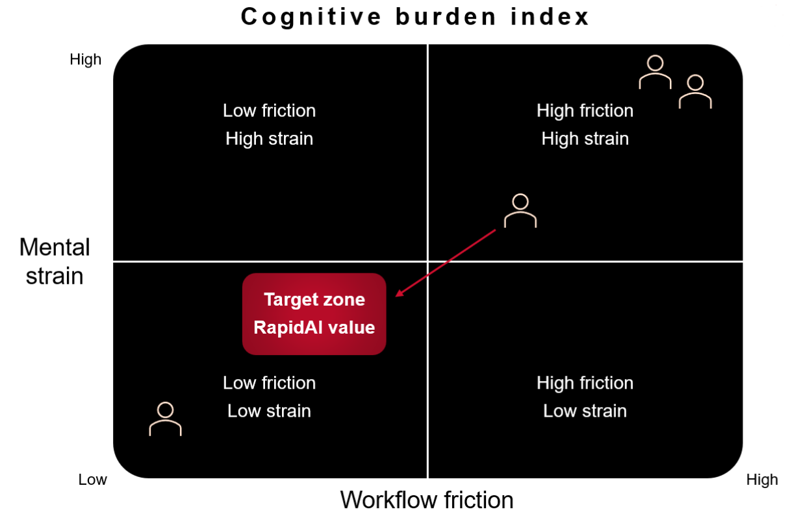
As health systems expand their use of AI, access to algorithms is only part of the equation.
Each new solution introduces questions about deployment, clinical adoption, performance oversight and how the technology fits into existing operations.
For clinicians, the stakes are different but equally important. A powerful algorithm has limited value if its insights are disconnected from the people responsible for acting on them.
There’s an important distinction between offering a collection of AI tools and building an enterprise clinical AI platform.
RapidAI brings together deep clinical AI, connected clinical workflows, resilient infrastructure and centralized AI governance to help health systems put these technologies to work at scale.
With Optellum available through the Rapid Enterprise Platform, health systems can extend their existing RapidAI infrastructure to support lung nodule management without introducing an entirely separate AI deployment.
For clinical teams, this means greater access to specialized AI capabilities within a broader enterprise environment designed to support clinical decision-making and coordination.
For health system leaders, it means a more consistent approach to scaling AI, with shared infrastructure and a central place to monitor performance and oversee AI use
Building an enterprise platform around the patient journey
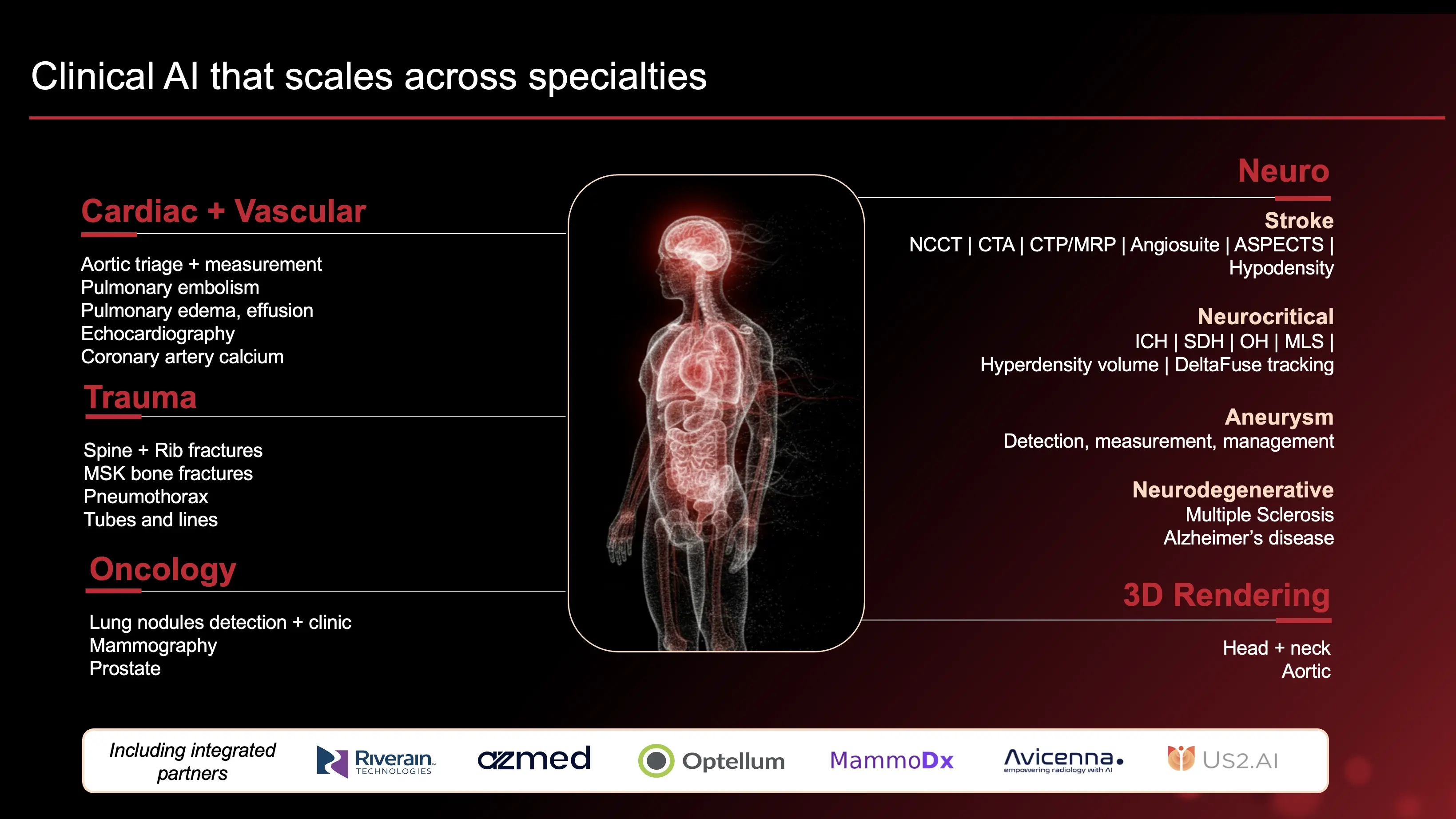
The addition of Optellum is part of a broader expansion of the Rapid Enterprise Platform, which now brings together more than 50 RapidAI-developed and third-party clinical solutions spanning neurology, cardiac and vascular, trauma, and oncology care.
But the number of solutions isn't the story.
What matters is what health systems can do with them.
RapidAI combines specialized clinical intelligence with enterprise workflows that connect radiologists and care teams, helping translate imaging and patient data into actionable clinical context.
Optellum extends that approach into the lung nodule pathway, where clinical value depends not only on what an image reveals, but also on what happens after the finding is documented.
Because the future of enterprise clinical AI isn't about collecting more algorithms.
It's about making clinical intelligence more connected, more actionable and more valuable to the people delivering care.
Explore the Rapid Enterprise Platform
FAQs
Who is responsible for follow-up when a lung nodule is found incidentally?
Often no one is explicitly assigned. The radiologist documents the nodule in the report, the patient goes home, and the ordering clinician moves on, so the finding sits in a report that no one owns. The gap in care usually appears after the read, when someone has to identify which patients need review, assess risk, own the next step, and bring the patient back at the right time.
How can health systems keep incidental lung nodules from being lost to follow-up?
By building a defined pathway that starts when the nodule is documented, rather than relying on manual chart pulls. Optellum’s Patient Discovery AI automatically searches radiology reports for documented lung nodules and identifies patients for review, and its Lung Cancer Prediction (LCP) AI analyzes CT images to assess a nodule’s cancer risk so teams can prioritize the patients who need attention soonest.
Does adding Optellum’s Virtual Nodule Clinic require a separate AI deployment?
No. Because the Virtual Nodule Clinic (VNC) with LCP AI is integrated with the Rapid Enterprise™ Platform, health systems can extend their existing RapidAI infrastructure to support lung nodule management without introducing an entirely separate AI deployment. This gives leaders shared infrastructure and a central place to monitor
References
1. World Health Organization, International Agency for Research on Cancer (IARC), Global Cancer Observatory.
2. Pyenson et al., 2019.