
Your must-see guide to ISC
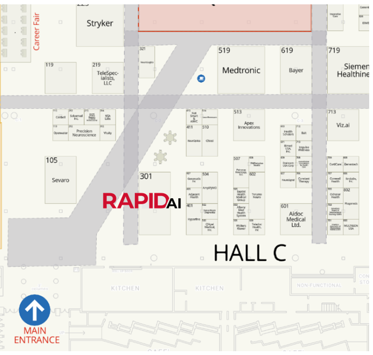
Stop at booth 301 to see how the latest innovations in deep clinical AI can help you continue to improve stroke care.
Enhanced perspectives: Advancing stroke care with deep clinical AI
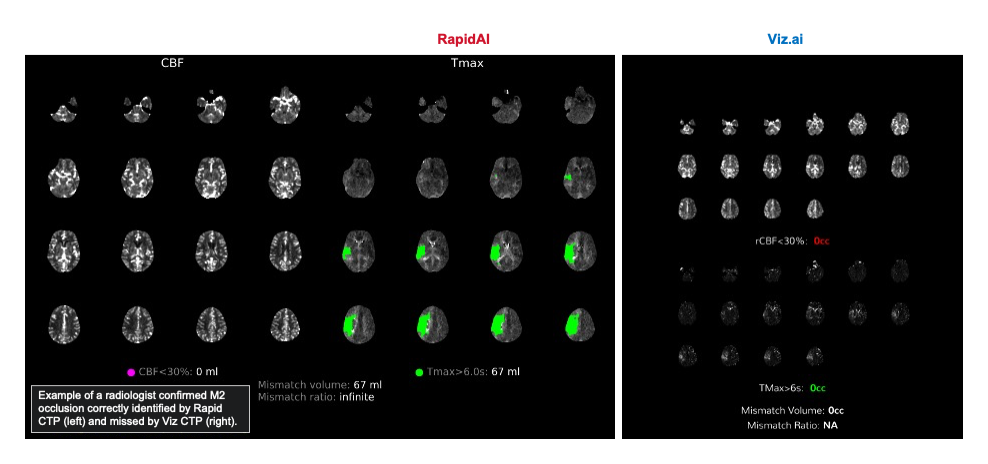
- Innovative technology improving MeVO and posterior stroke assessment
- Key workflow integration considerations
- Best practices in NCCT, ASPECTS, CTA, and perfusion utility
DATE
Wednesday, Feb 4th
TIME
12:45 - 1:15 pm CT
LOCATION
Learning Studio III: Level 2, Room 245
Sessions, abstracts, and more of interest
Moderated digital oral presentation, Poster Hall
Automated Midline Shift Quantification with Rapid MLS: Transforming Acute Neurological Patient Care
Rapid MLS provides fast, reproducible MLS measurements on NCCT, with accuracy comparable to expert neuroradiologists. This tool may enhance triage and decision-making in stroke, traumatic brain injury,and other emergencies by reducing time to diagnosis and intervention
Speakers:
Jeremy J Heit, MD, PhD; Justin Honce, MD; Hafez Haerian, MD; Karen Copeland, MD
Poster Hall
Validation of an AI-Powered Module for Rapid, Accurate 3D Cerebrovascular Segmentation in CTA: Impact on Workflow and Clinical Decision-Making
This clinical validation study determines the accuracy of Lumina 3D segmentations by comparing its segmentations against those of expert neuroradiologists. Results showed that Lumina 3D produces clinically accurate, reproducible vascular segmentations with rapid turnaround, supporting efficient CTA interpretation in high-stakes stroke workflows.
Speakers:
Keith Kwok, Karen Copeland
Poster Hall
Reduced Interpretation Time, Improved Detection of High-Grade Stenosis and Occlusions using Lumina3D: A Multi-Reader, Multi-Case Study
In a simulated study, automated 3D reconstructions using Rapid Lumina 3D improve diagnostic accuracy (better detection of occlusions and/or high grade stenosis) and reduce interpretation time, compared to using CTA source only, particularly for general radiologists
Speakers:
Dhairya Lakhani, Christopher Song, Musharaf Khan, Justin Addicks, Karen Copeland, and James Montuori
Poster Hall
Improving Efficiency and CT Technologists' Workflow using Lumina 3D, an AI-Enhanced CT Head and Neck Reconstruction Solution: A case study
Implementation of Lumina 3D at the Nebraska Methodist Health System significantly improved CT workflow efficiency by reducing reconstruction time and technologist workload. The resulting time savings enabled an increase in imaging volume and revenue generation, demonstrating how AI-driven automation can optimize operational capacity and enhance patient throughput in radiology departments.
Speakers:
Leslie Cattau, Rhea Jensby, Paige Dennis
Poster Hall
Diagnostic Accuracy of an AI-Driven Triage Tool for Obstructive Hydrocephalus on Non-Contrast Head CT
In a retrospective multicenter study, Rapid Obstructive Hydrocephalus correctly identified the presence of obstructive hydrocephalus in 90% of cases (high sensitivity), while correctly excluding hydrocephalus in 97% of the total cases (high specificity). These results demonstrated high diagnostic accuracy for detecting hydrocephalus on NCCT with sub-minute processing times (about 30 seconds per case). Integration of this product into neuro-emergency workflows may reduce time-to-diagnosis, prioritize urgent reviews, and enable faster intervention for at-risk patients.
Speakers:
Raza Mushtaq, Justin Morris Honce, Adam Ezra Goldman-Yassen, Karen Copeland
Poster Hall
Post Treatment Follow-up MRI Imaging Biomarkers of Collateral Status Are Associated With Short-Term Outcomes in Large Vessel Acute Ischemic Stroke (LVO-AIS)
Speakers:
Dhairya A Lakhani, Cynthia Greene, Hamza A Salim, Argye E Hillis, Kambiz Nael, Jeremy Heit, Tobias D Faizy, Vivek S Yedavalli
Moderated Digital Oral Presentation - Theater 5
Gradation of prolonged venous transit highlights the impact of deep venous drainage impairment in successfully reperfused anterior circulation large vessel occlusion stroke
Speakers:
Dhairya A Lakhani, Cynthia Greene, Hamza A Salim, Argye E Hillis, Kambiz Nael, Jeremy Heit, Tobias D Faizy, Vivek S Yedavalli
Oral presentation - room 211 - 213
Antithrombotic Therapy and Risk of Intracranial Hemorrhage in Patients with Cerebral Cavernous Malformations: A Multicenter Propensity-Matched Cohort Study
Speakers:
Hamza A Salim, Dhairya A Lakhani, Cynthia Greene, Argye E Hillis, Kambiz Nael, Jeremy Heit, Tobias D Faizy, Max Wintermark, Vivek S Yedavalli
Moderated digital oral presentation - Theater 4
Membranous Chronic Subdural Hematomas Show Superior Resolution and Lower Recurrence After Surgical Evacuation with Adjunctive MMAE
Speakers:
Hamza Adel Salim, Dhairya A. Lakhani, Muhammed Amir Essibayi, Anwar Zahran, David J. Altschul, Max Wintermark, Adam A. Dmytriw, Vivek S. Yedavalli
Moderated digital poster presentation - Theater 4
Association of Endovascular Thrombectomy With Mortality and Functional Outcomes in Large Ischemic Core: Analysis of Linked RAPID AI and Florida Stroke Registry data
In this statewide registry–imaging linked cohort, imaging-defined perfusion mismatch emerged as the strongest predictor of EVT utilization. These findings highlight key clinical, radiographic, and system-level factors influencing EVT decision-making, underscoring the central role of perfusion imaging in guiding treatment.
Speakers:
Negar Asdaghi, MD, MSc; Saurabh Kalra, MPH; Farya Fakoori, MD, MS; Natalie Zaba Sai Himaja Kodali; Deepthi Puram; Hannah Gardener, ScD; Giana Dawod, MD; Aaron Eduardo Rodriguez Calienes, MD; Julia Kimia Houshmand, David Z Rose; Angus Jameson, MD, MPH; Ayham Alkhachroum, MD; Gillian Gordon Perue, MD; Tatjana Rundek, MD, PhD; Carolina M. Gutierrez, PhD; Gregory W. Albers, MD; Carolina Maier, PhD; Jose G. Romano, MD
Poster Hall
Artificial Intelligence Outperforms Radiologists in Detecting Aneurysm Growth
Rapid's Aneurysm platform (Surgical Preview) is significantly more effective than human neuroradiologists at detecting cerebral aneurysmal growth. Rapid effectively doubled the detection rate vs. human comparison while also maintaining the same level of accuracy for non-growth (stable) cases.
Poster Hall
Prolonged Venous Transit Is Associated with Unfavorable Functional Outcomes in Large Core Stroke
In a retrospective cohort study using data from consecutive patients with large core acute ischemic stroke (AIS) caused by large vessel occlusion (LVO), prolonged venous transit (PVT) derived from Rapid CTP Perfusion maps was associated with unfavorable outcomes. PVT may serve as a prognostic marker, warranting further investigation in larger prospective studies to guide treatment decisions in this high-risk population.
Speakers:
Hamza A Salim, Dhairya A Lakhani, Argye E Hillis, Kambiz Nael, Jeremy Heit, Tobias D Faizy, Max Wintermark, Vivek S Yedavalli
Poster Hall
Composite Arterial and Venous Collateral Score on Single-Phase CTA Predicts 90-Day Outcomes in Anterior Circulation Large-Vessel Occlusion Stroke
CCIS, a composite arterial and venous collateral score derived from single-phase CTA, was strongly and independently associated with 90-day outcomes in anterior circulation LVO stroke. Its integration into acute stroke imaging assessment may improve risk stratification and guide therapeutic decisions.
Speakers:
Hamza A Salim, Dhairya A Lakhani, Cynthia Greene, Argye E Hillis, Kambiz Nael, Jeremy Heit, Tobias D Faizy, Max Wintermark, Vivek S Yedavalli
Poster Hall
Ischemic Lesion Net Water Uptake Outperforms ASPECTS and CBF<30% in Predicting Futile Recanalization After MT
This retrospective study analyzed Net Water Uptake and ischemic core volume in a group of LVO patients who underwent successful mechanical thrombectomy. Results showed that Net Water Uptake is a strong, non-invasive biormaker of futile recanalization.
Speakers:
Dhairya A Lakhani, Cynthia Greene, Hamza A Salim, Argye E Hillis, Kambiz Nael, Jeremy Heit, Tobias D Faizy, Vivek S Yedavalli
Poster Hall
Redefining ischemic core, penumbra, and target mismatch on CT perfusion in acute anterior distal medium vessel occlusion
This retrospective study analyzed how well pre-+-treatment rCBF volumes correlated with MRI-based post-treatment volumes in a group of acute anterior distal medium vessel occlusions. Results showed that parameters such as rCBF <38% and Tmax >8s derived from Rapid CTP perfusion maps best correspond to ischemic core and penumbra, and reveal optimal perfusion-based target mismatch criteria. This suggests that the utilization of Rapid CTP Perfusion maps can potentially help in ideal patient selection for MeVO EVT clinical trial.
Speakers:
Dhairya A Lakhani, Cynthia Greene, Hamza A Salim, Argye E Hillis, Kambiz Nael, Jeremy Heit, Tobias D Faizy, Vivek S Yedavalli
Poster Hall
Predictors of Endovascular Thrombectomy Utilization in Clinical Practice: Analysis of Linked Florida Stroke Registry and RAPID AI Data
In this statewide registry–imaging linked cohort, imaging-defined perfusion mismatch emerged as the strongest predictor of EVT utilization. These findings highlight key clinical, radiographic, and system-level factors influencing EVT decision-making, underscoring the central role of perfusion imaging in guiding treatment.
Speakers:
Julia Kimia Houshmand, Saurabh Kalra, MPH, Natalie Zaba, Farya Fakoori, MD, MS, Sai Himaja Kodali, Deepthi Puram, Hannah Gardener, ScD, Giana Dawod, MD, Aaron Eduardo Rodriguez Calienes, MD, David Z Rose, Angus Jameson, MD, MPH, Ayham Alkhachroum, MD, Gillian Gordon Perue, MD, Tatjana Rundek, MD, PhD, Carolina M. Gutierrez, PhD, Gregory W. Albers, MD, Jose G. Romano, MD, Carolina Maier, PhD, Negar Asdaghi, MD, MSc
Poster Hall
Enhancing Stroke Analytics via Data Linkage: Lessons from Florida Stroke Registry and RAPID-AI
This study demonstrates the successful linkage of comprehensive clinical data from the FSR with advanced RAPID AI imaging metrics across multiple hospitals. The integration of these datasets enables robust real-world stroke research by combining detailed clinical and imaging information, ultimately supporting improved understanding and outcomes in stroke care.
Speakers:
Farya Fakoori, MD, MS, Saurabh Kalra, MPH, Natalie Zaba, Sai Himaja Kodali, Deepthi Puram, Hannah Gardener, ScD, Giana Dawod, MD, Aaron Eduardo Rodriguez Calienes, MD, Julia Kimia Houshmand, David Z Rose, Angus Jameson, MD, MPH, Ayham Alkhachroum, MD, Gillian Gordon Perue, MD, Carolina M. Gutierrez, PhD, Tatjana Rundek, MD, PhD, Gregory W. Albers, MD, Carolina Maier, PhD, Jose G. Romano, MD, Negar Asdaghi, MD, MSc
Poster Hall B
Sex-Related Differences in Outcomes of Endovascular Treatment of Distal Medium Vessel Occlusion Strokes
Speakers:
Hamza A Salim, Dhairya A Lakhani, Cynthia Greene, Argye E Hillis, Kambiz Nael, Jeremy Heit, Tobias D Faizy, Adrien Guenego, Adam A. Dmytriw, Max Wintermark, Vivek S Yedavalli
Poster Hall B
Comparison of baseline ASPECTS, Ischemic Lesion Net Water Uptake, and CBF<30% for the Prediction of Failed Recanalization during Mechanical Thrombectomy
Speakers:
Dhairya A Lakhani, Cynthia Greene, Hamza A Salim, Argye E Hillis, Kambiz Nael, Jeremy Heit, Tobias D Faizy, Vivek S Yedavalli
Poster Hall
Redefining ischemic core, penumbra, and target mismatch on CT perfusion in acute anterior distal medium vessel occlusion
Speakers:
Dhairya A Lakhani, Cynthia Greene, Hamza A Salim, Argye E Hillis, Kambiz Nael, Jeremy Heit, Tobias D Faizy, Vivek S Yedavalli
Hall D - Main Event Hall
Carotid Revascularization and Medical Management for Asymptomatic Carotid Stenosis–Hemodynamics -- Main Results
Speakers:
David S Liebeskind, Ronald M Lazar, James F Meschia, Giuseppe S Lanzino, Brajesh Lal, Randolph S Marshall, George Howard, Navdeep S Sangha, Jenifer H Voeks, John Huston, Lloyd Jerome Edwards, Thomas Brott, Carlos Mena-Hurtado, Vikram Kashyap, Mel Sharafuddin, Donald V Heck, Herbert D Aronow, Yu Zhang, Kevin Slane
Oral presentation, Poster Hall
Correlation of Elevated Serum Troponin with Core Volume in Ischemic Stroke
Speakers:
Marina Moore, Steven J Warach, Jefferson T Miley, Scarlett Milling
Stop in and say hello
Visit booth 301
We'll be hard to miss again this year! We're excited to share our latest innovations to help you and your teams exceed their goals.