

Choosing the right clinical AI platform is one of the most consequential technology decisions a health system can make. The pressure to adopt AI is real. But moving fast without a structured evaluation framework leads to poor integration, low clinician adoption, and technology that fails to deliver on its promise. Getting it right demands more than a product demo.
Clinical validation must come before vendor claims
Not all AI is created equal. Many vendors make bold claims about accuracy and performance. Peer-reviewed clinical evidence is what separates credible platforms from marketing noise.
When reviewing any AI tool for healthcare, ask for published studies. Look for evidence drawn from diverse, real-world patient populations. Results from a single institution or tightly controlled trial may not hold in your clinical environment.
Regulatory clearance is a baseline, not a guarantee of clinical utility. FDA clearance or CE marking confirms safety and basic effectiveness. It does not confirm that a tool will improve outcomes in your specific patient population. In fact, a published study shows that only 18% of approved modules have been shown to impact clinical decision-making and patient outcomes.
Prioritize platforms with:
- Published, peer-reviewed validation data across multiple institutions
- Evidence of real-world performance, not just controlled study results
- Transparency about algorithm reasoning
- Deep foundational models that provide insights have been shown to enhance decision-making
Clinical AI platform integration and workflow fit matter as much as accuracy
A clinically accurate tool that disrupts workflow will not get used. That is a well-documented challenge in healthcare AI adoption. Clinician buy-in depends heavily on how seamlessly a tool fits into existing systems and workflows.
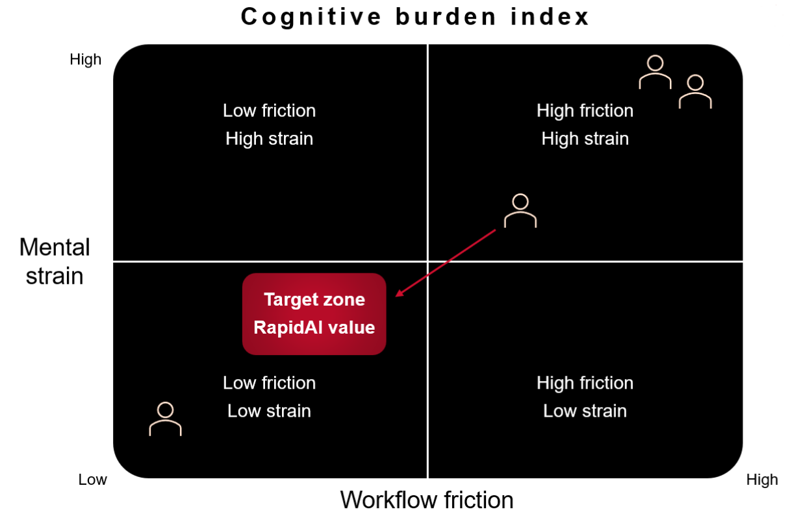
Evaluate how a platform integrates with your PACS, EHR, and communication infrastructure. Ask whether alerts route to the right people at the right time. A tool that sends countless notifications to one role only is not moving care forward in a meaningful way. It creates more friction than it resolves.
A potential imaging finding is helpful, but clinical context and radiology to clinician collaboration across the care pathway is transformative. AI that works where the radiologist works, and where the care team members and specialists work, is critical.
Clinical AI platform scalability across the enterprise
Health systems rarely need a point solution. They need infrastructure. Hospital AI buying criteria should account for how a platform scales beyond a single service line or use case.
Ask vendors how they support deployment across multiple facilities. Understand how the platform handles varied scanner types, imaging protocols, and patient volumes. Governance tools matter here, too. You need centralized visibility into which AI tools are running where and how they are performing.
A true enterprise platform delivers consistent performance across the system. It also allows IT and clinical leadership to manage AI deployment at scale. This becomes critical as AI expands from radiology into broader clinical workflows.
The governance and support questions most buyers overlook
Purchasing AI is not a one-time transaction. It is an ongoing clinical and operational commitment. Many health systems underinvest in evaluating long-term vendor support.
Ask how the vendor handles model updates. Understand what happens when performance degrades. What is the escalation path? Who is accountable?
Also, evaluate data governance carefully. Understand where patient data is processed and stored. Confirm compliance with HIPAA, GDPR, or applicable regional regulations. Your security and compliance teams should be involved early, not brought in after a purchase decision is made.
Start your evaluation with the right foundation
At RapidAI, our enterprise platform was built to meet these exact criteria. Our foundation is rigorous clinical validation. Based on the DAWN and DEFUSE 3 clinical trials, which used Rapid imaging to select stroke patients for late-window treatment, the American Heart and American Stroke associations revised their guidelines to extend the treatment window for acute stroke patients from 6 to 24 hours.
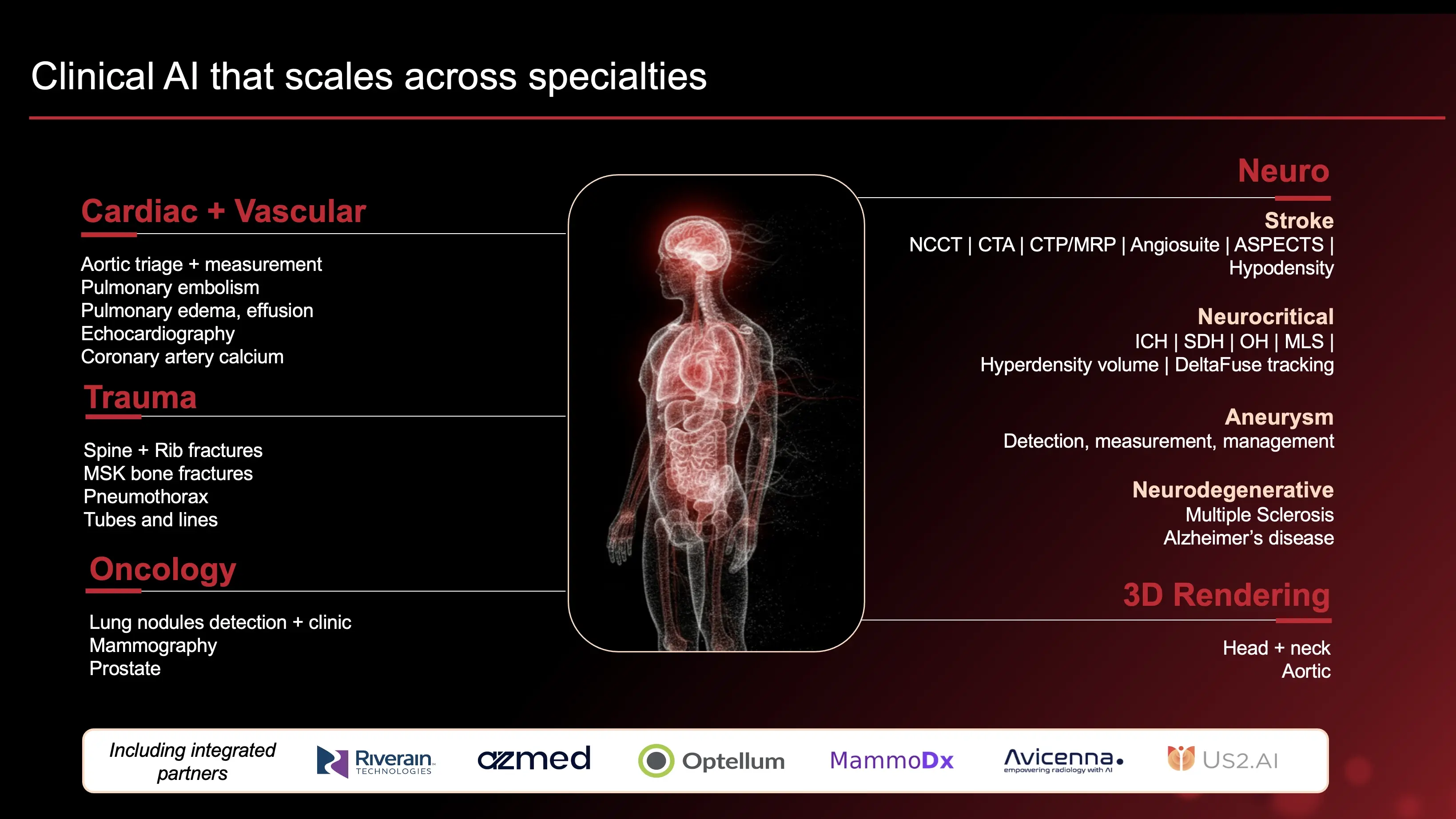
Rapid AI's platform today goes far beyond stroke to give health systems a scalable AI imaging infrastructure across neurology, cardiovascular, pulmonary, vascular, and oncological indications
If your health system is evaluating clinical AI decision support platforms, download our 10 Essential questions when evaluating enterprise clinical AI platforms. The best AI partners welcome hard questions. Use this guide to ask them and to find out who's ready to be held accountable for outcomes.
Frequently asked questions
How should health systems structure a cross-functional AI evaluation team?
The evaluation team should include clinical champions (such as radiologists, neurologists, interventional cardiologists, and vascular surgeons), IT and informatics leaders, operations and administration, and frontline workflow stakeholders. Each group brings a different lens. A platform that passes clinical review but fails on IT security or workflow integration is not ready for enterprise deployment.
What should health systems ask about AI model performance drift?
Model drift occurs when algorithm performance degrades over time due to changes in patient populations, scanner technology, or imaging protocols. Ask vendors how they monitor for drift.
Who should own AI governance once a platform is deployed?
Governance should not sit with one team. IT, clinical leadership, and operations each have distinct responsibilities. Define those roles before go-live: who monitors performance, who approves model updates, who responds to a clinical concern flagged by the system, and who communicates changes to frontline users.